STEM Educator Hub
Curriculum-ready materials designed by marine biologist Yechiel Kuperman to bridge the gap between humorous classroom reading and rigorous biological science.
Free marine biology lesson plans for elementary school
A complete set of free K–5 marine biology lesson plans built around the one piece of equipment a classroom can actually keep running: a working aquarium. Each unit pairs a chapter with a real observation task, a water test, and a printable worksheet.
It includes the printable classroom pack, an honest NGSS mapping — which performance expectations each unit gives you an opportunity to address, not a claim that it covers them — and a plan for what happens to the tank over the school holidays.
Read the free K–5 marine biology lesson plansGuides for teachers
Free Marine Biology Lesson Plans for Elementary School
Free K–5 marine biology lesson plans built round a real classroom aquarium, with a printable pack, honest NGSS mapping and a holiday survival plan.
Read itClassroom Aquarium Setup Guide for Teachers
Set up a classroom aquarium that survives the school year: what size tank, why cycling takes weeks, weekend and holiday cover, and which fish to pick.
Read itNitrogen Cycle Lesson Plan for a Classroom Aquarium
A free nitrogen cycle lesson plan for ages 7 to 11: five sessions, the water tests students plot, and the bacterium the classroom poster names wrongly.
Read itMarine Biology Activities for Elementary School, With No Aquarium
Eight marine biology activities for elementary school that need no aquarium and almost no budget: salinity, buoyancy, food webs, camouflage and sound.
Read itAquarium Science Fair Project Ideas That Never Put a Fish at Risk
Ten aquarium science fair project ideas for ages 8–13 that never put a fish at risk — real water chemistry, real graphs, and the numbers judges ask about.
Read itWhat to Do With a Classroom Fish Tank Over the Holidays
The honest holiday plan for a classroom fish tank: how long fish safely go unfed, when to use a feeder or a helper, and the pre-break mistakes to avoid.
Read itA Homeschool Marine Biology Curriculum You Can Actually Run
A nine-week homeschool marine biology curriculum for ages 7–10: three books, free teacher notes and quizzes, one experiment a week, and no aquarium needed.
Read itAn Ocean Unit Study for Elementary School, Week by Week
A five-week ocean unit study for elementary grades, built on real USGS and NOAA numbers, with a free printable and a hands-on experiment for every week.
Read itScience Read-Alouds for the Classroom: How Long Each Takes and Where to Stop
Science read-alouds for Grades K–5, each timed straight through, with the pages to stop on for questions and the three-second pause that gets real answers.
Read itSTEM Picture Books for the Classroom, Chosen for a Class and a Budget
How to choose STEM picture books for a whole class on a small budget: a two-minute accuracy check, eight titles across the strands, and what to borrow.
Read itHomeschool Science Without a Lab: Your Kitchen Already Has One
No lab, no problem. What a science lab really gives you, the kitchen kit that does the same job, and how to run a fair test at home with ages 7 to 10.
Read it
Two questions teachers ask first
What does "NGSS-mapped" mean here?
Each lesson note maps its chapter's science — ecosystems, food webs, organism structures and behaviours, water chemistry — to the Next Generation Science Standards life-science topics for grades 2–5, so you can slot a George chapter directly into an existing unit. The stories carry the concepts; the lesson notes name the standards and add the discussion questions, vocabulary, and a hands-on activity.
What is included, and what does it cost?
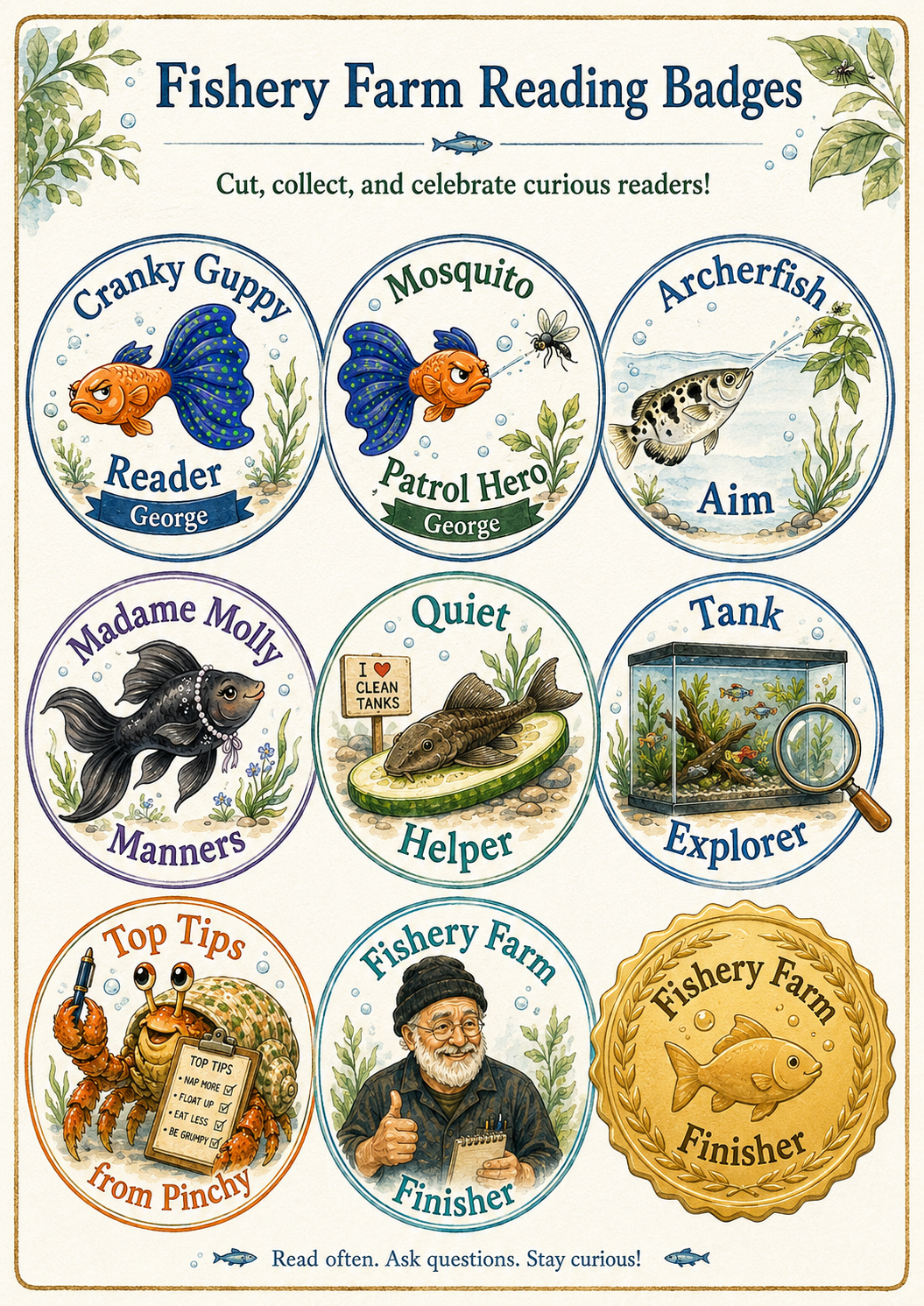
Everything on this page is free: chapter-by-chapter teacher lesson notes for Books 1–3, comprehension and vocabulary quizzes, printable classroom posters, and reading reward badges. No login, no paywall, no student accounts, and no tracking — download the PDFs and teach.
Teacher Quick Facts
| Parameter | Quick Facts |
|---|---|
| Grade level | 2–5 |
| Ages | 7–10 |
| Subject | Life science / ecosystems / reading comprehension |
| Time | 30–45 minutes per lesson |
| Includes | Teacher notes, vocabulary, discussion questions, printable worksheet, answer key |
| Standards | NGSS-mapped, exact codes listed inside PDF |
| Privacy | No student login or child account required; no individual student tracking |
Chapter-by-Chapter Lesson Plans
Our teacher notes are not just basic summaries. They are complete science guides that map the story’s situations directly to biological truths. Every guide includes discussion starters, key vocabulary, laboratory-style explanations, and hands-on classroom activities.
Designed for NGSS (Next Generation Science Standards) elementary curriculums.
Book-by-Book Teacher Lesson Notes
.png&w=1920&q=75)
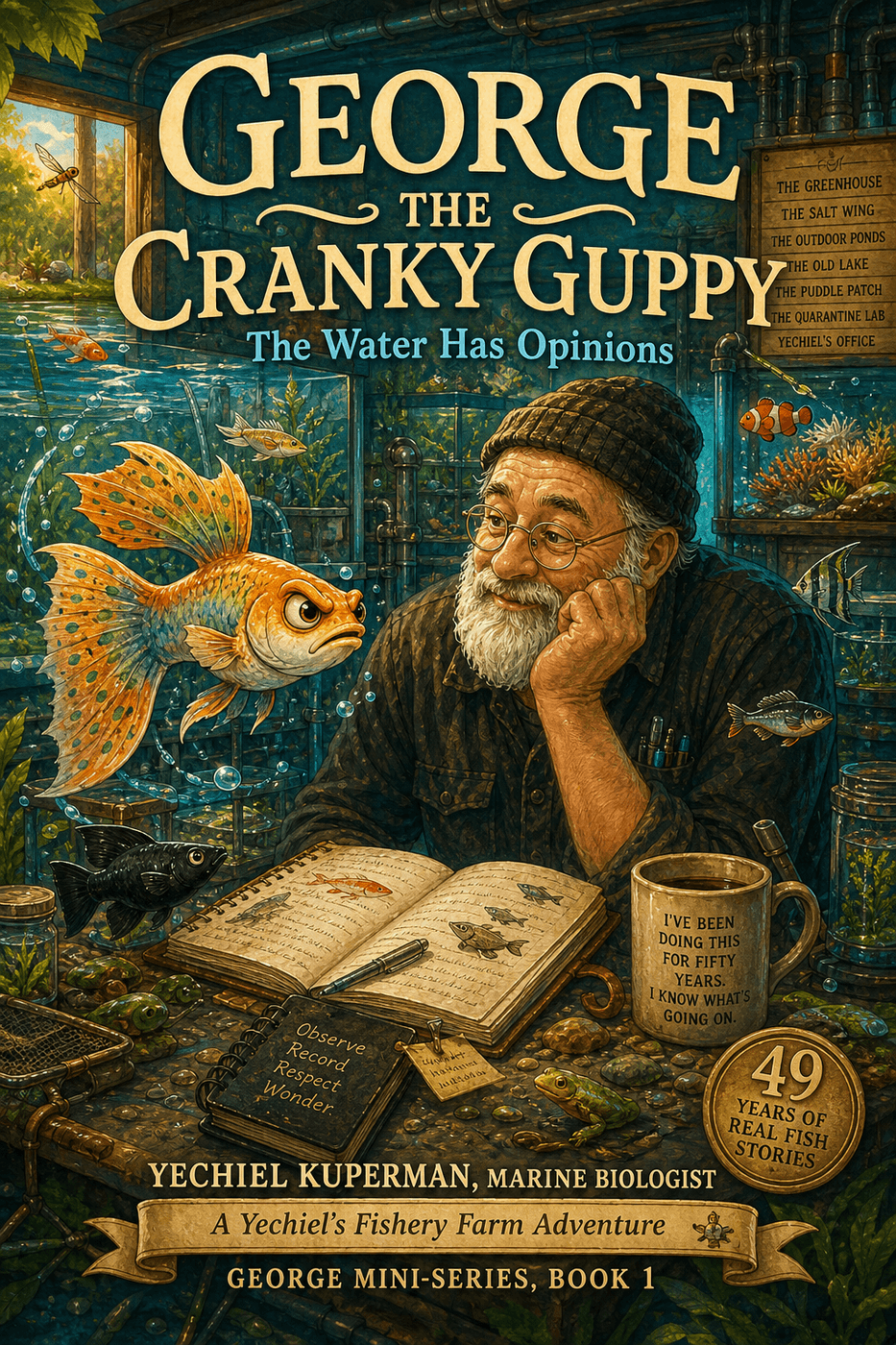
George the Cranky Guppy
STEM Science Companion · Ages 7–10
Pulls the real science out of Book 1, focusing on how a freshwater fish's body reacts to brackish conditions and the biology of osmotic acclimation.
Key Concepts Explored:
- •Salinity & osmotic pressure
- •Gill function & aquatic respiration
- •Stress response & fish physiology
- •Acclimation & transition protocols
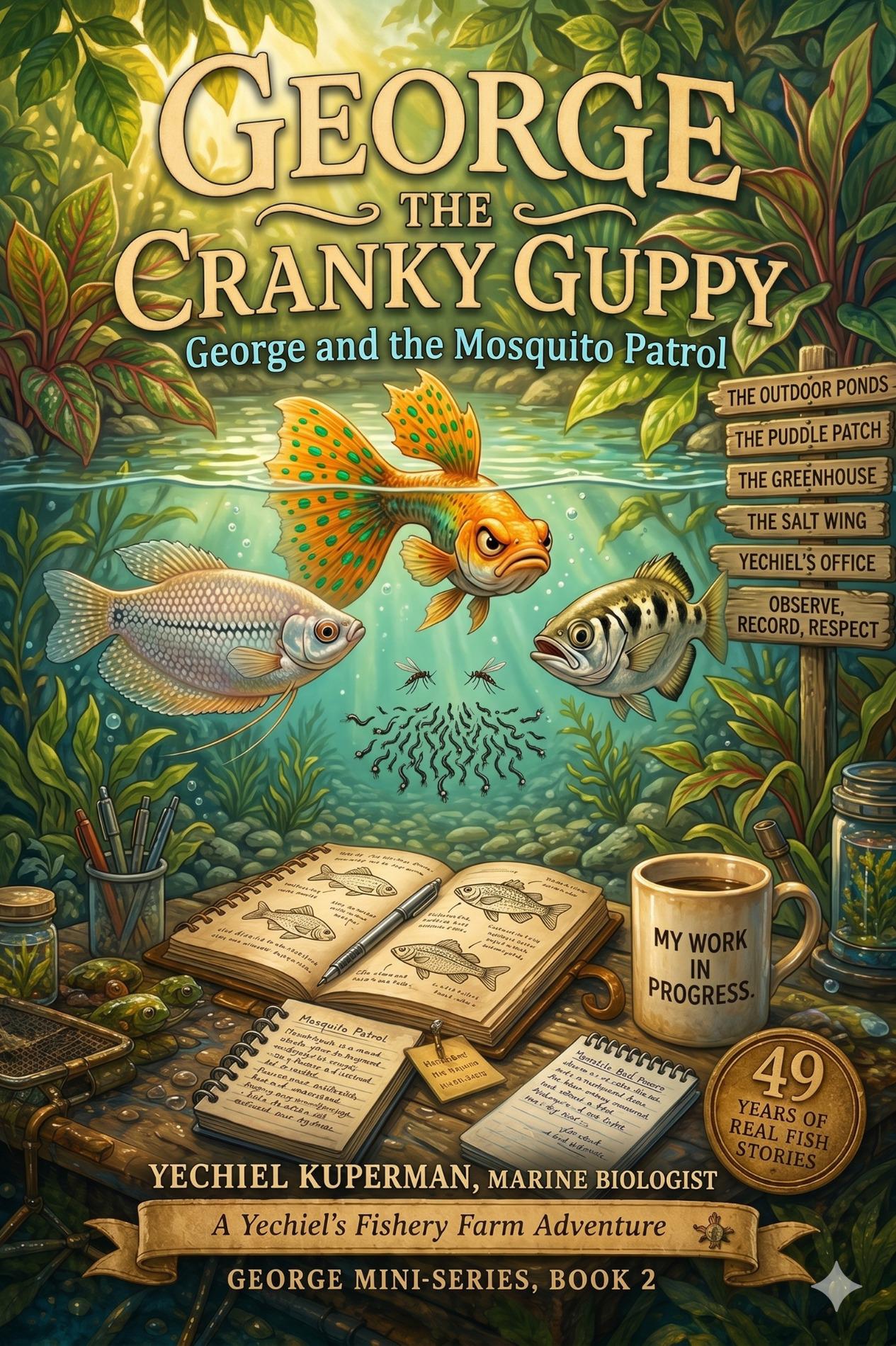
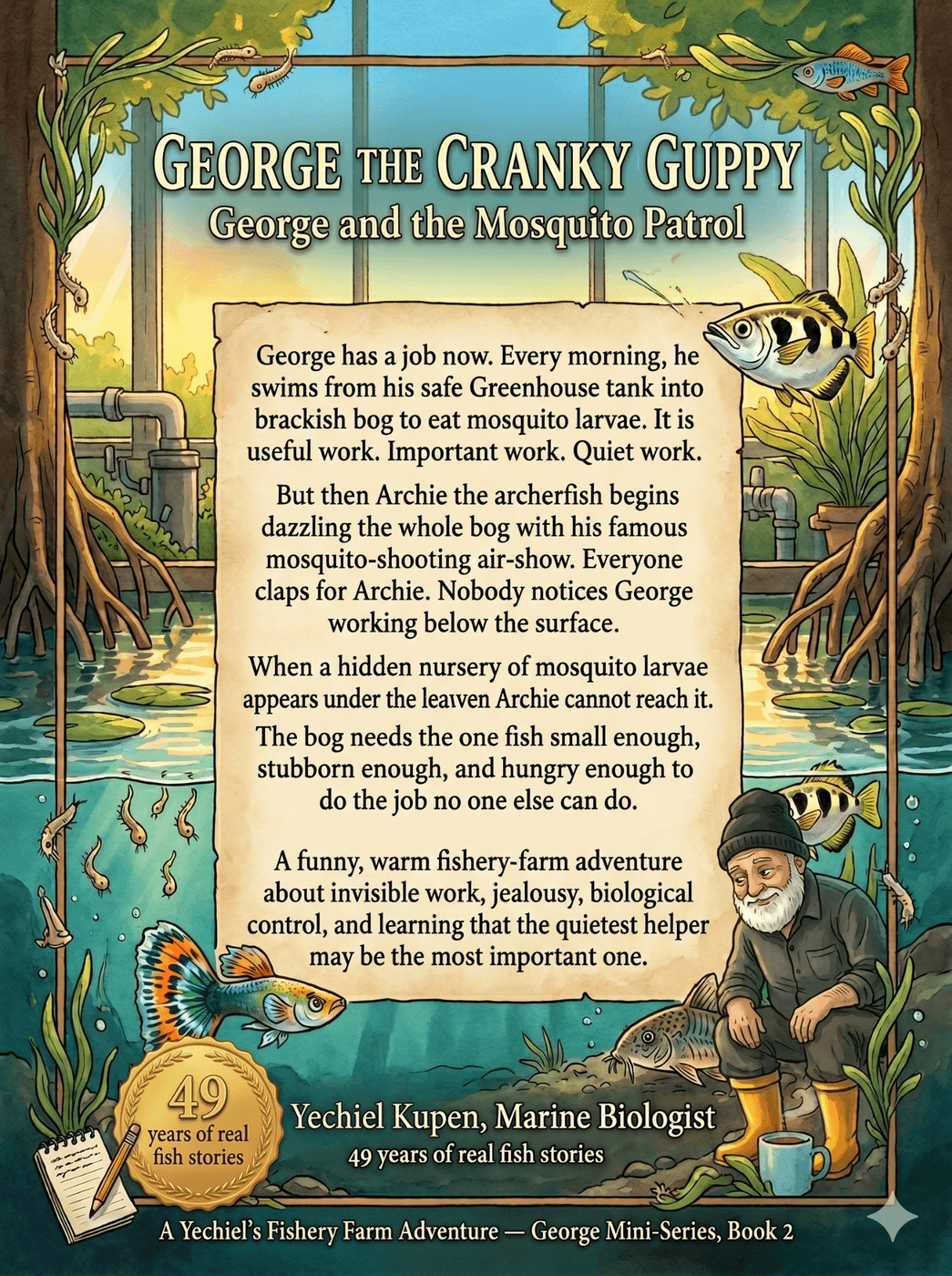
George and the Mosquito Patrol
STEM Science Companion · Ages 7–10
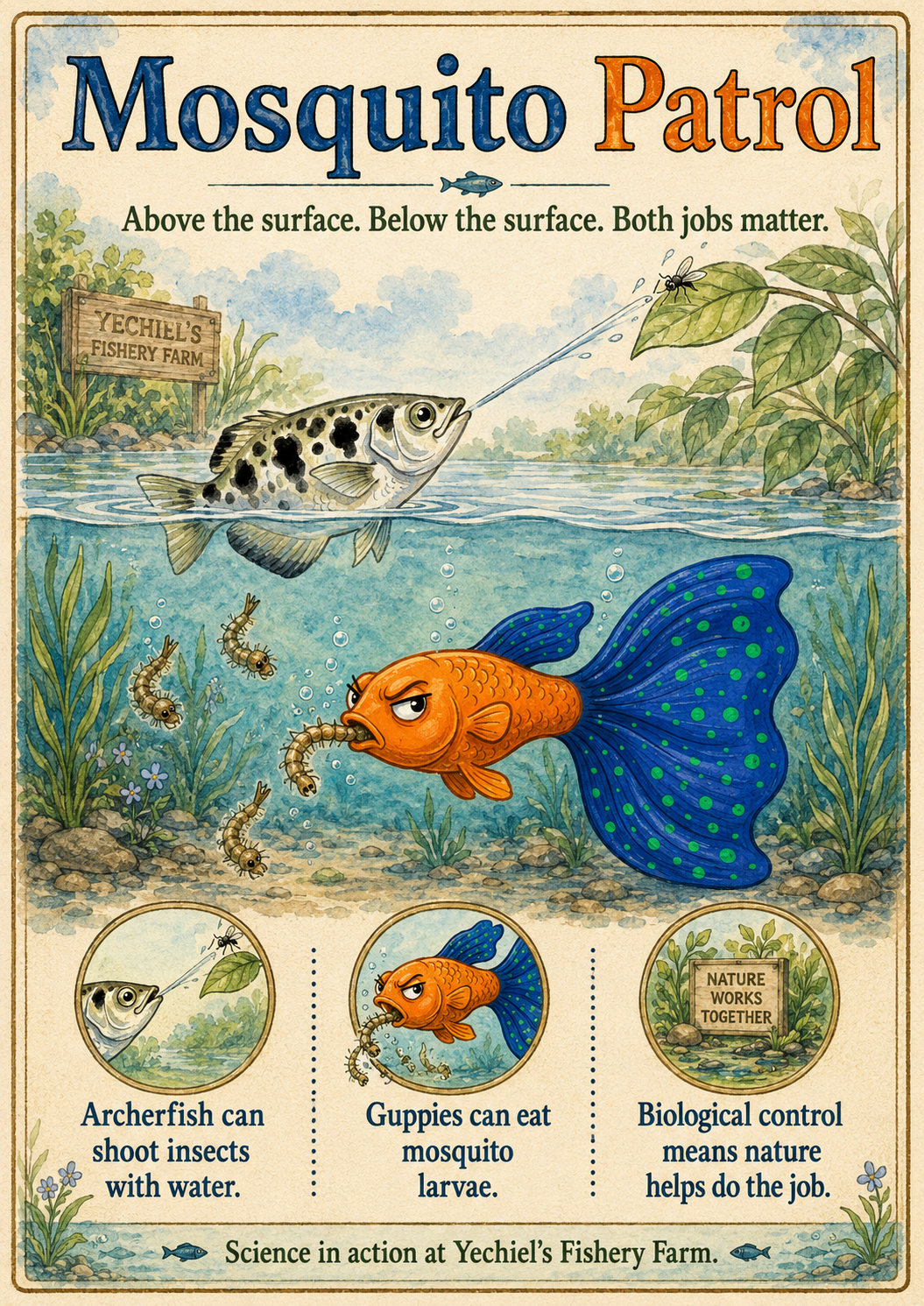
Maps the biology of mosquito control, exploring insect life cycles, food chains, prey-predator relationships, and specialized hunting adaptations.
Key Concepts Explored:
- •Food webs & trophic levels
- •Mosquito life cycles (larvae to adult)
- •Biological vector management
- •Physics of Archerfish hunting jets
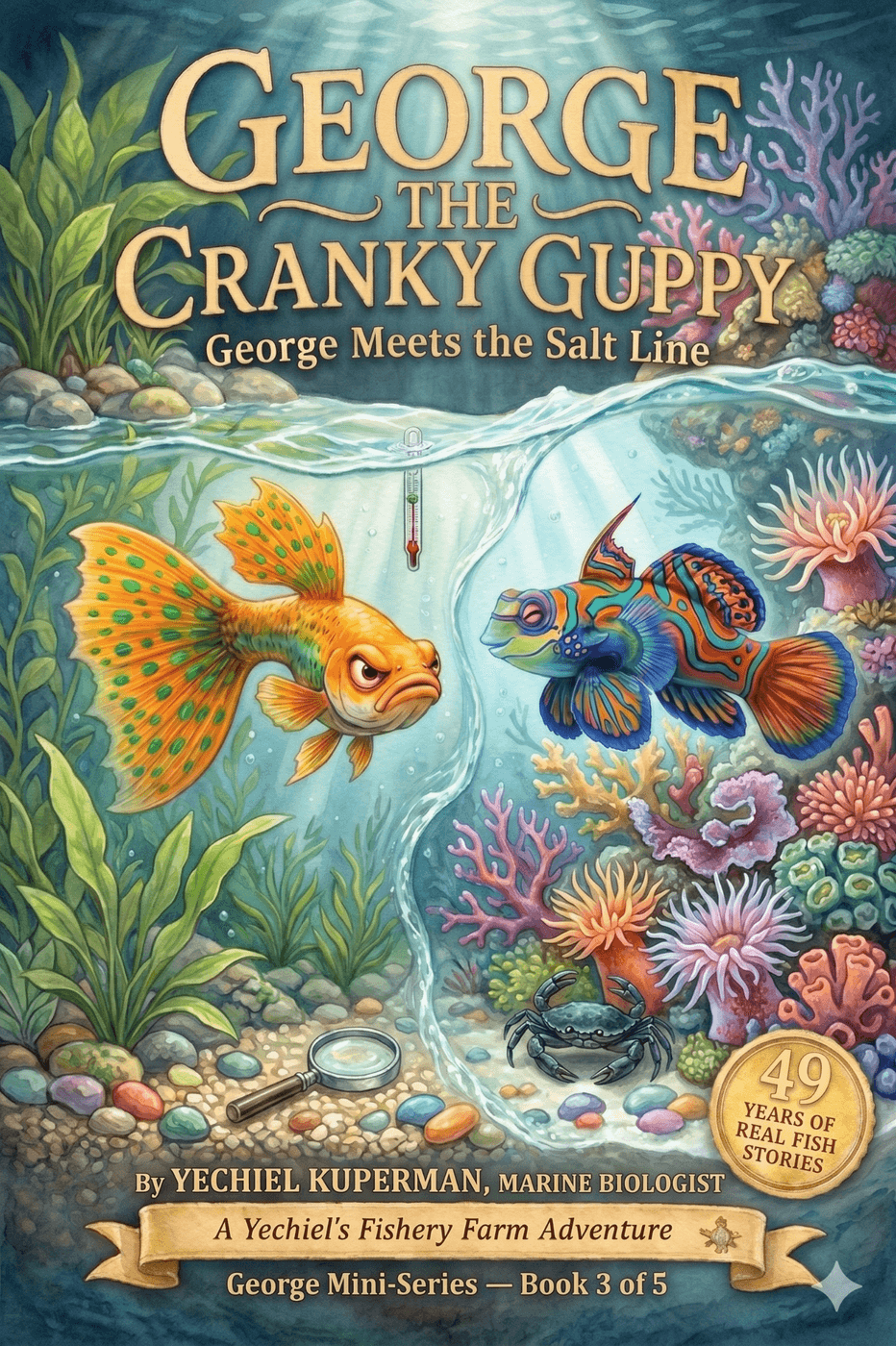
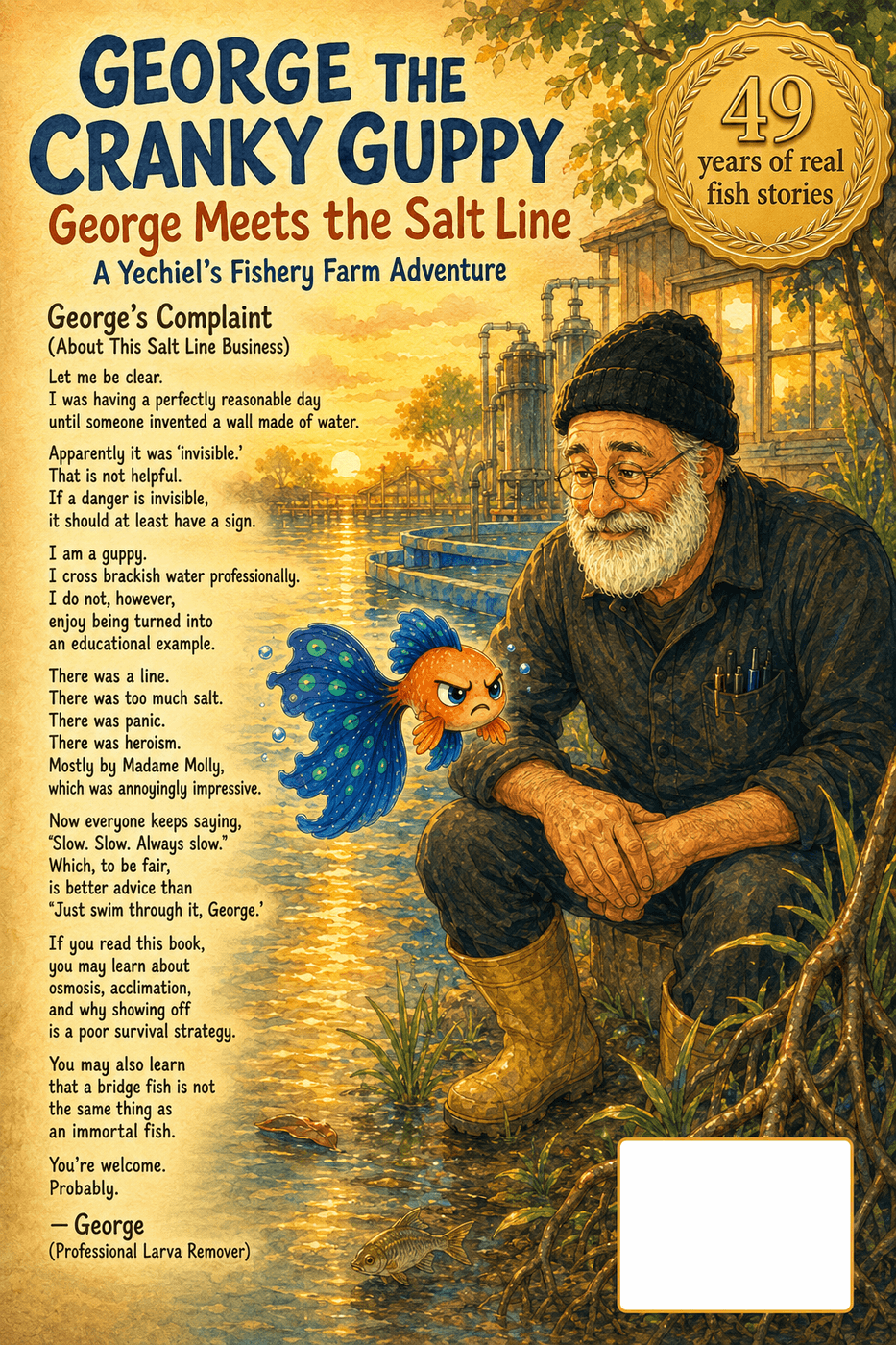
George Meets the Salt Line
STEM Science Companion · Ages 7–10
Goes deep into advanced concepts like internal cellular salt-balance, the beneficial bacteria nitrogen cycle, fluid densities, and scientific recording.
Key Concepts Explored:
- •Osmoregulation (salt/water balance)
- •The Nitrogen Cycle (nitrate & filters)
- •Water density & halocline layering
- •Scientific logging & recording mistakes
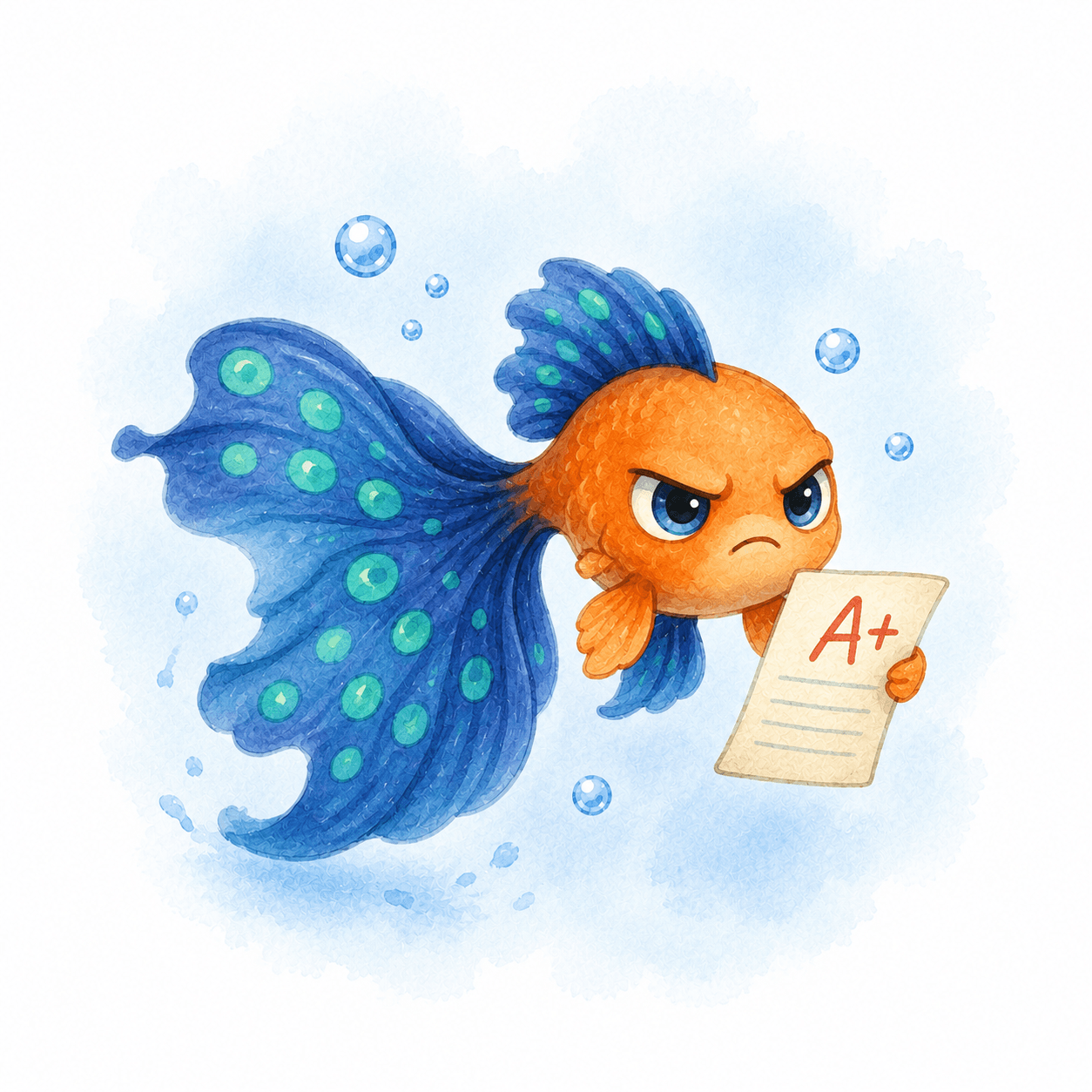
Comprehension & Vocabulary Quizzes
Dyslexia-friendly reading comprehension sheets built around the stories of George and his friends. Designed to test tracking, word meanings, and retention.
Classroom Posters & Reading Badges
Reward students with printable badges and decorate your classroom with beautiful posters featuring science trivia and designs from the Fishery Farm.
Classroom Posters & Badges Library
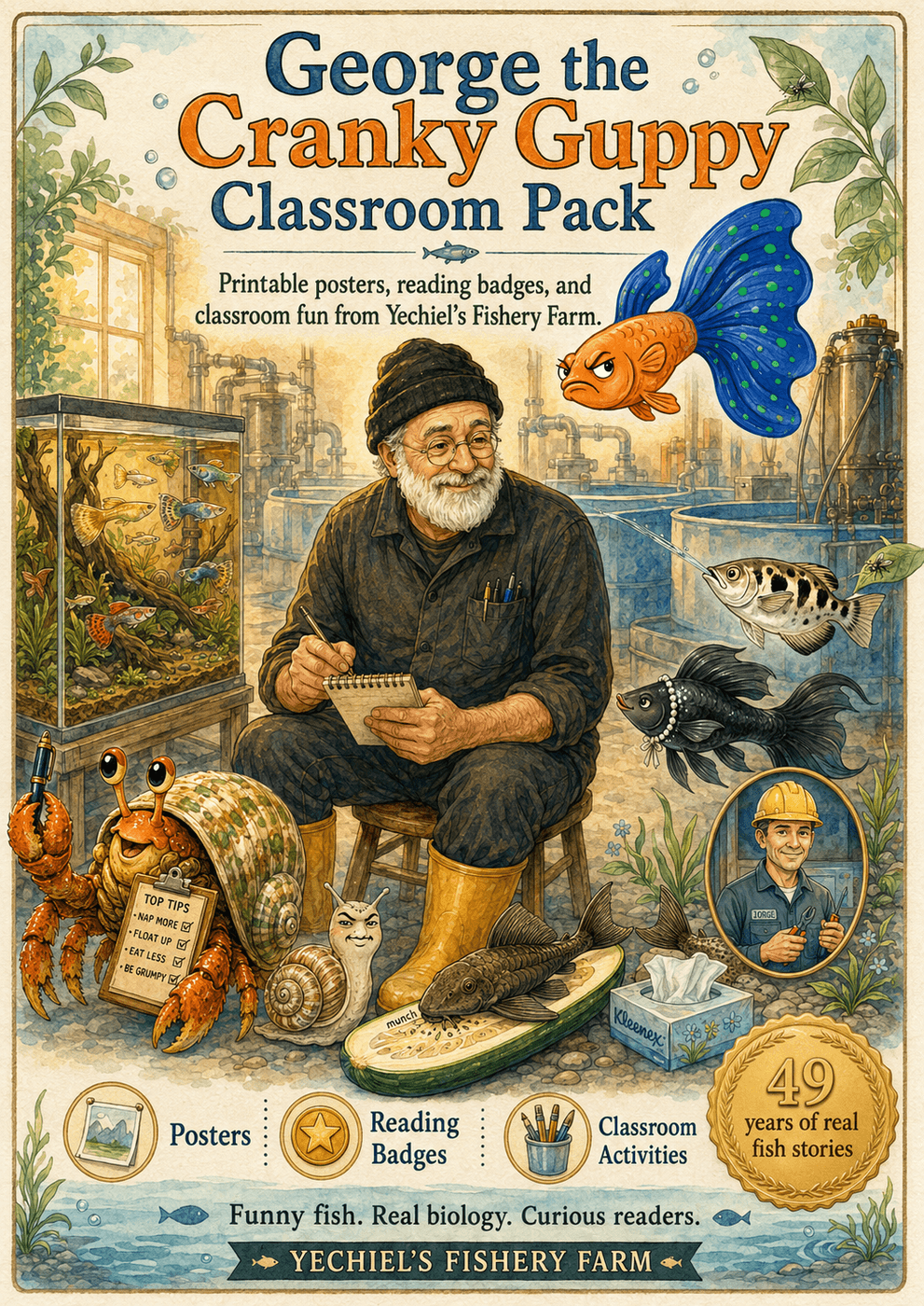
Classroom Pack Cover
The official Yechiel's Fishery Farm classroom pack cover featuring George and friends.
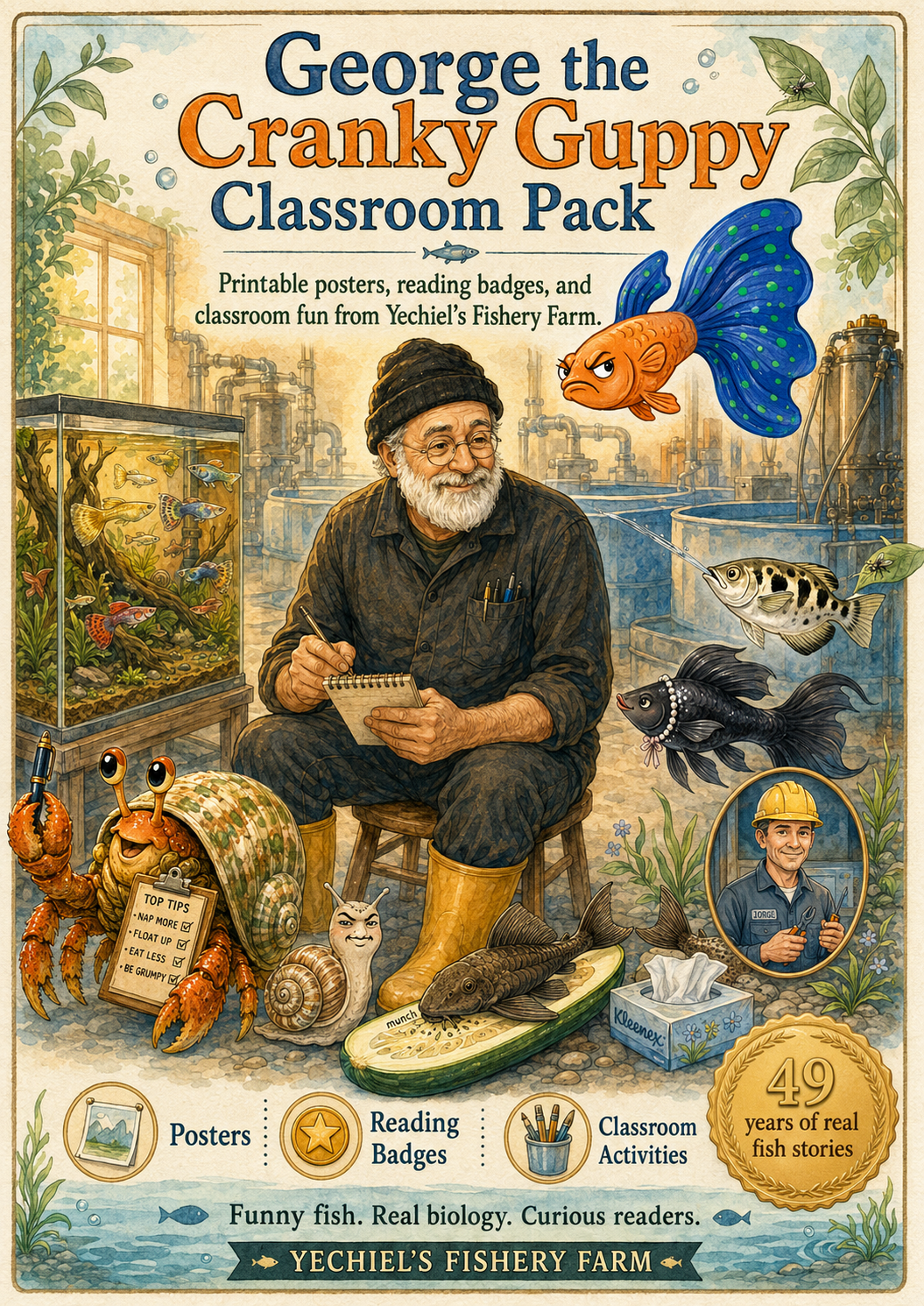
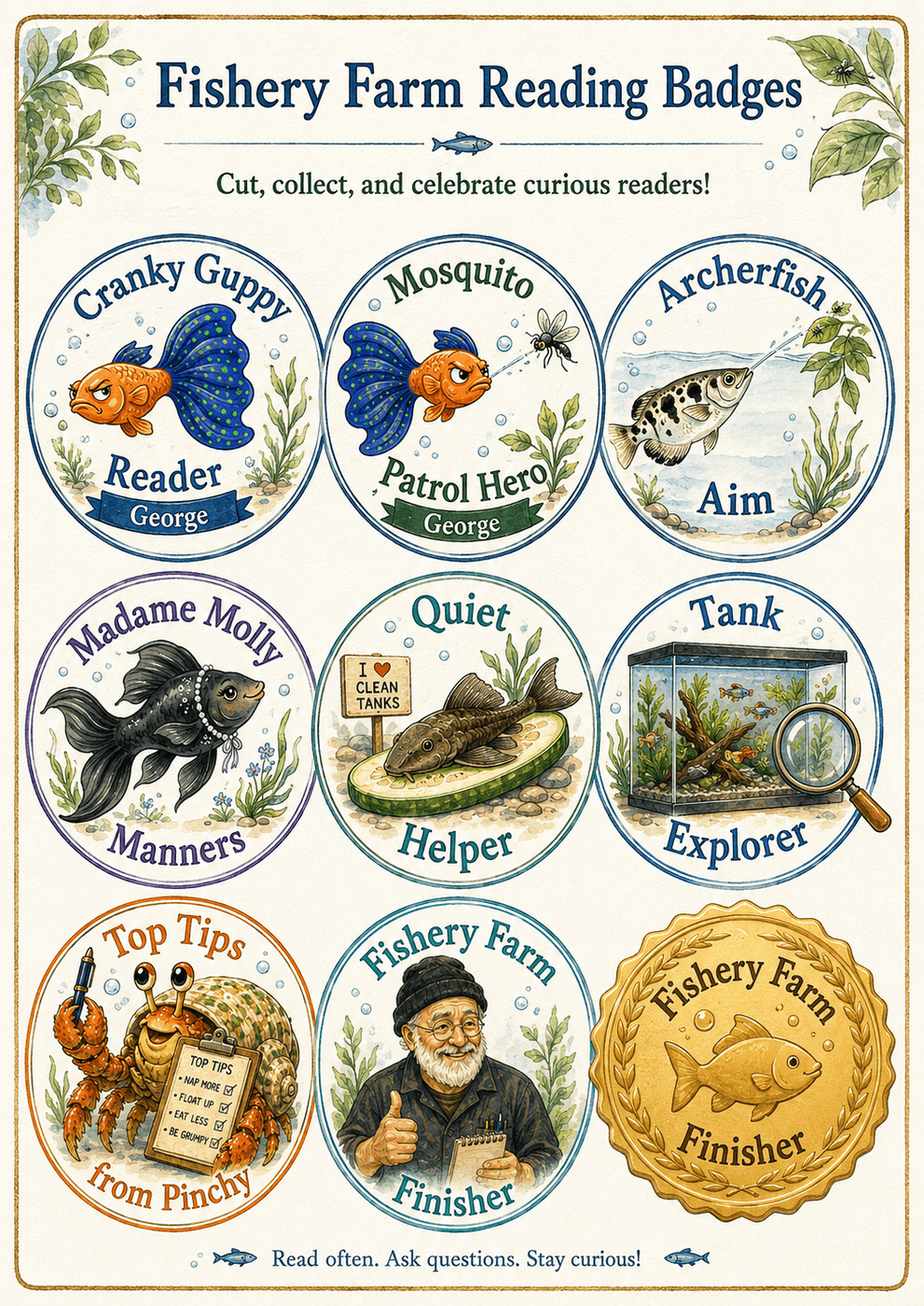
Reading Badges
Printable merit badges to reward students as they progress through books 1-10.
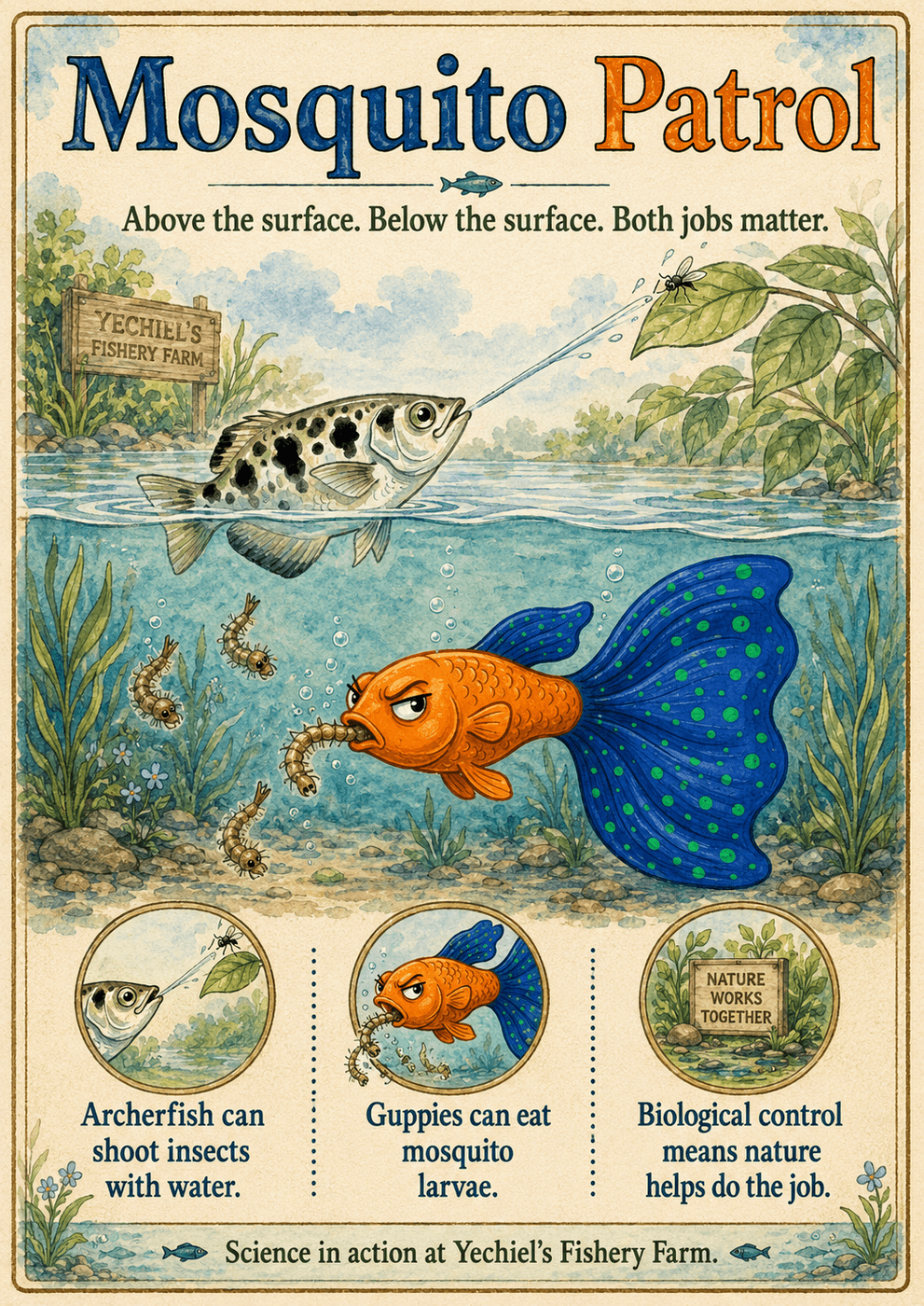
Mosquito Patrol Poster
Educational vector control science poster detailing mosquito life cycles and predators.
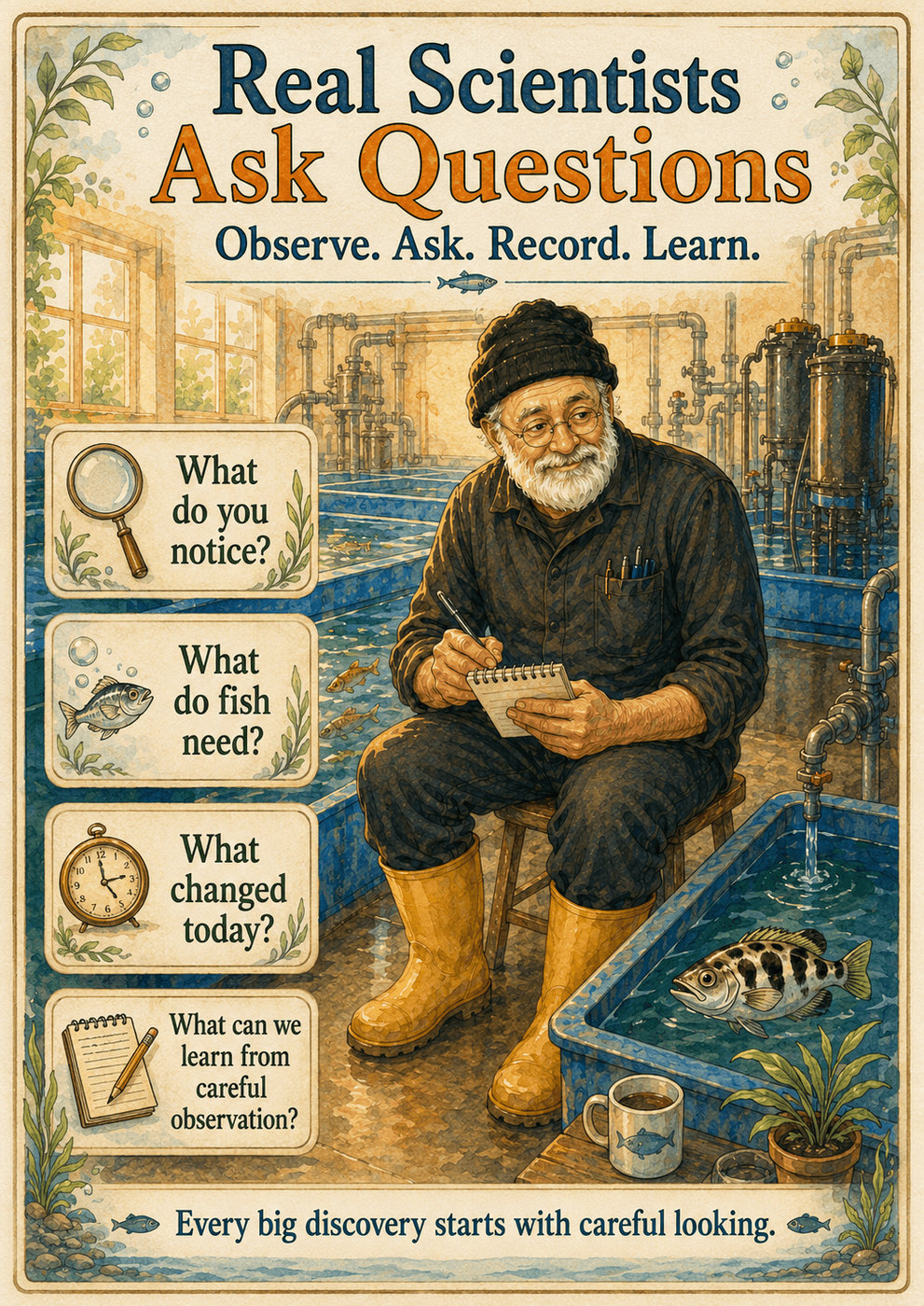
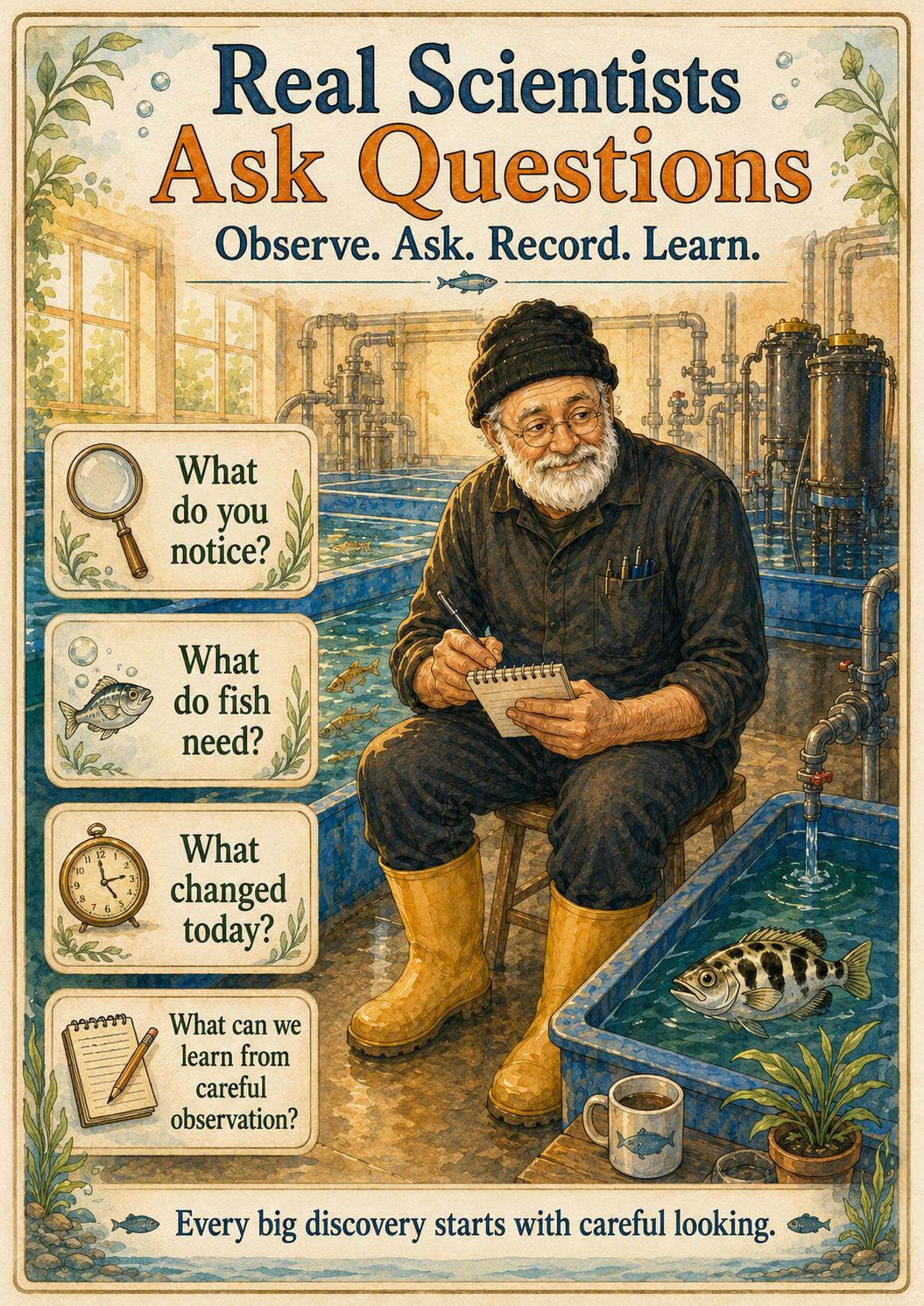
Real Scientists Ask Questions
Inspirational classroom poster encouraging scientific observation and recording mistakes.