The Bog's Blog

Thoughts, observations, and occasional complaints from the residents of Yechiel's Fishery Farm.

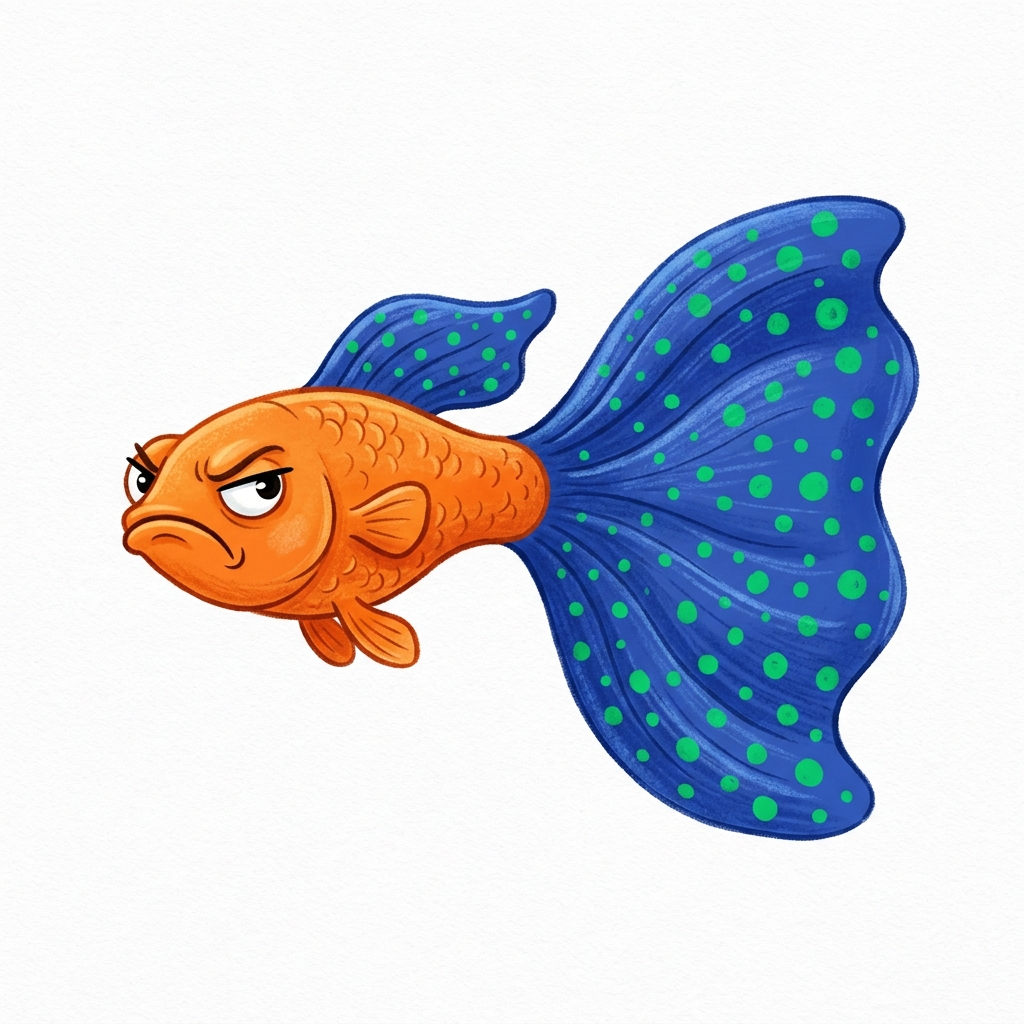
George the Cranky Guppy
Issue #1

Guppies Are Not For The Internet

By George the Cranky Guppy

I am a guppy. I eat mosquito larvae. I maintain water quality. I patrol my designated sector of the bog with the kind of ruthless efficiency that other fish only dream about. I do not type.

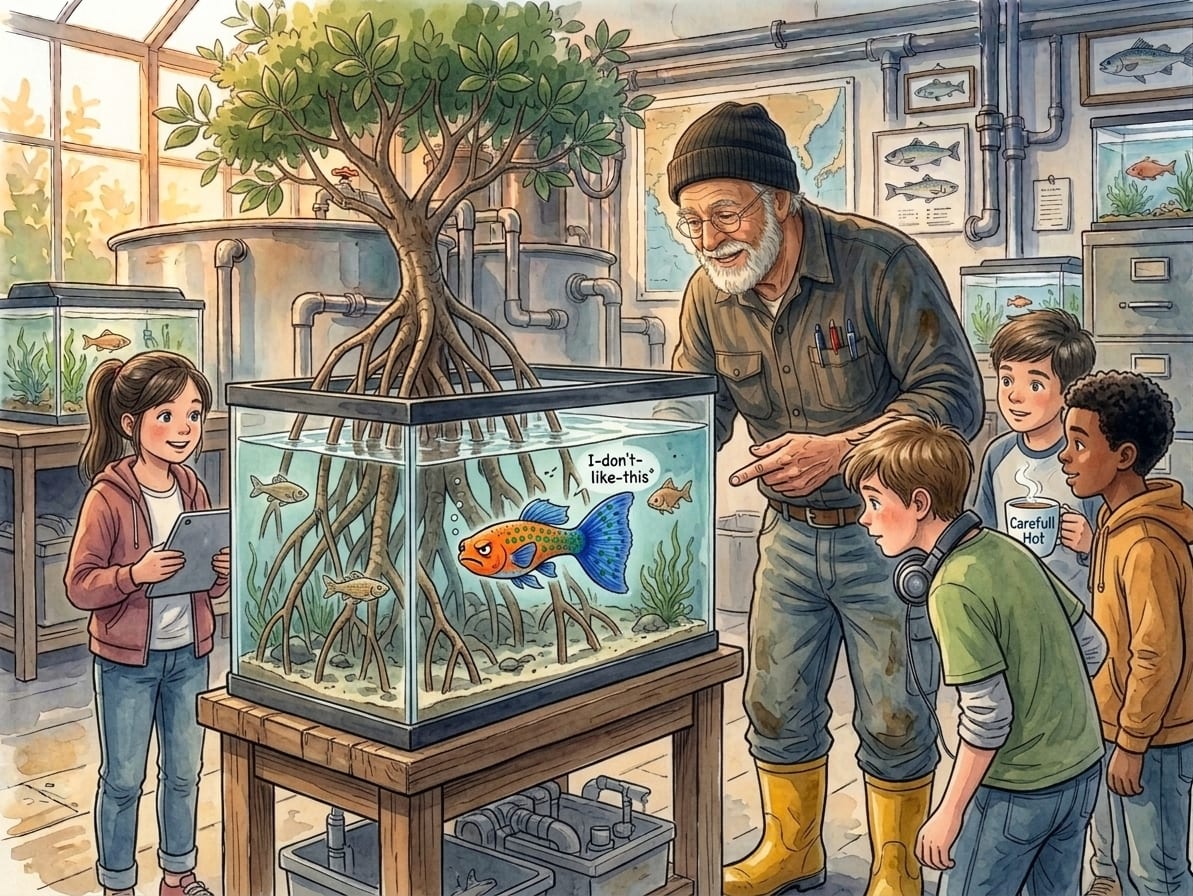
Yet here I am, staring at a screen because Yechiel decided the fish need a "voice" on the "internet." I don't even know what an internet is, but I am deeply suspicious of it. Does it have a filter? What is its nitrate level? If a mosquito lands on it, can I eat it? Nobody will answer these questions.

Let me explain something to you humans. My job is important. If I stop working for even five minutes, the mosquito population in this bog will triple, and suddenly Yechiel will be flapping his arms around the greenhouse complaining about bugs. Who saves him? Me. I save him. I am the silent, scaly guardian of this water.

But no, instead of doing my job, I have been instructed to "write a blog." The crab thinks this is hilarious. He has been clicking his claws at me all morning. He thinks he's getting the next post. If that crab gets a post, I am officially retiring to the deep end of the tank where the light doesn't reach.

So here is my official blog post: The water is fine. Stay out of my patrol patch. If you see a mosquito, let me know. I have work to do.

Pinchy the Hermit Crab
Issue #2

I Have Checked For The Net

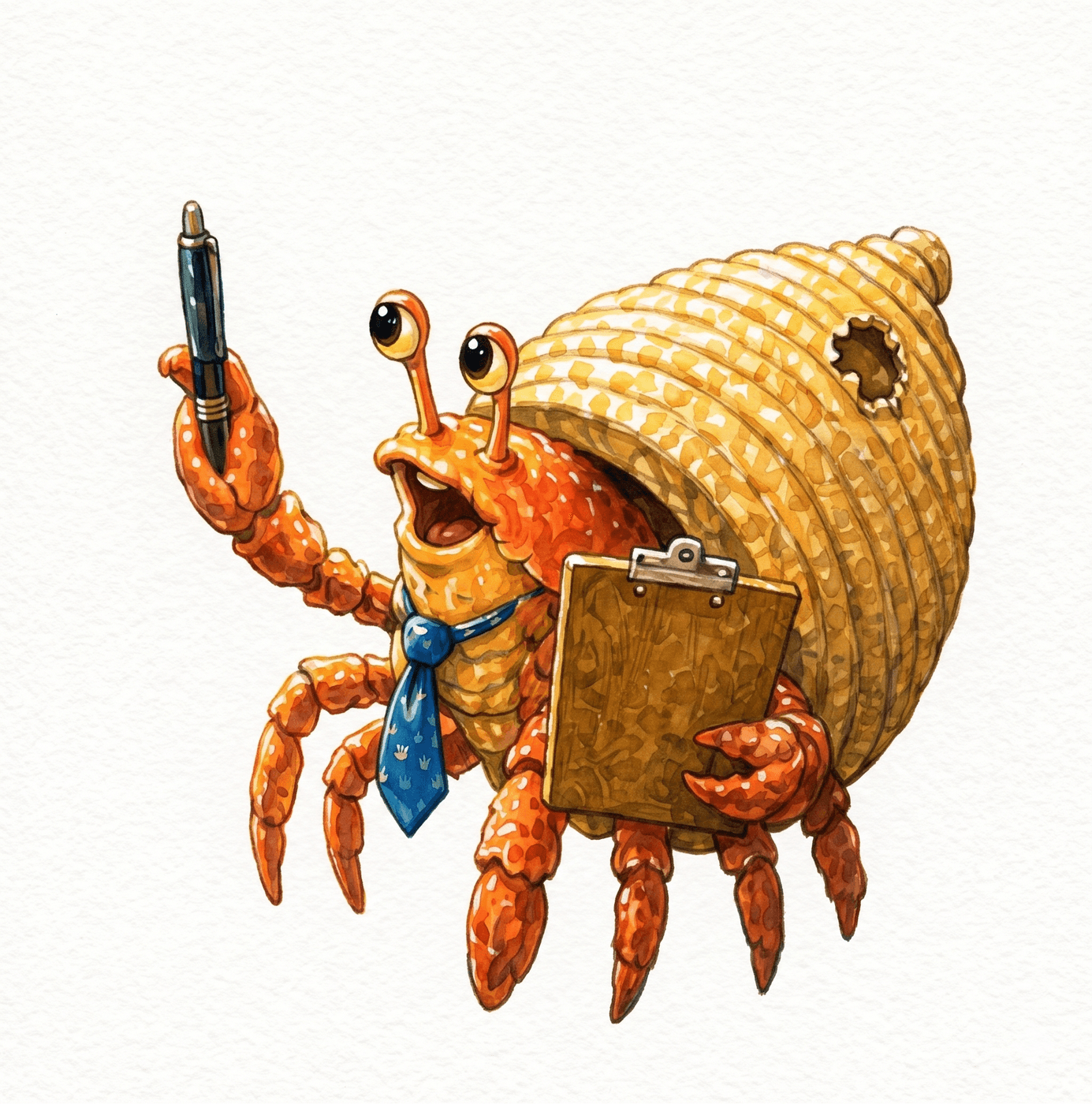
By Pinchy the Hermit Crab

George the guppy says he is on an internet. I have looked all around the tank. There is no net. I have walked the whole bottom. If there is a net, it is very well hidden. And why would a net be inner? Nets usually come from above, from the Giant Hand. I do not understand this.

George also says he is a scaly guardian. He is just a fish. Fish do not have houses on their backs. I like George, but I think he would be much less cranky if he found a good shell. A shell is a house you can carry. If the inner-net comes to get him, he has nowhere to hide. He just swims away. Swimming away is tiring. Hiding in a shell is very relaxing.

If he had a shell, he wouldn't be always afraid of stuff, like typhoons and yogurt. I see him swimming to the dark side of the tank. Is he practicing for the dark side of the moon? If he had a shell like those astro-nots on his head, he could go to the moon.

I wonder where Plecy is cleaning now? I saw him on the glass earlier. Sorry, what was the topic? A bog's blog in logs. Yes, a log is good. I like logs. You can hide under them.

George says I am clicking my claws at him. This is true. It is very good exercise. I will keep clicking my claws. Maybe it will scare the inner-net away.

From the Author

Yechiel's Science Corner

Real marine biology explained by the man who has been keeping fish for 49 years.

Marine Biology

Why Guppies Are One of the Most Important Fish in the World

Most people think of guppies as the small, pretty fish you buy for a child's first tank. They are right that guppies are small. They are right that guppies are pretty. What they do not know is that guppies have been at the centre of some of the most important discoveries in ecology, genetics, and disease control of the last hundred years.

The mosquito connection. Guppies are natural predators of mosquito larvae. A single adult guppy can consume hundreds of larvae per day. This is not a coincidence — guppies evolved in tropical freshwater environments where mosquito populations are dense, and they are extraordinarily efficient at what they do. Several countries have used deliberate guppy introduction programmes to manage mosquito populations without pesticides, with documented success in reducing malaria and dengue fever transmission.

What this means for children's science. When we show George the Cranky Guppy doing his morning patrol, eating mosquito larvae and being grumpy about it, we are not inventing drama for the sake of story. We are showing children a real ecological relationship — one that affects human health in dozens of countries. The science is hiding inside the comedy, and that is entirely deliberate.

— Yechiel Kuperman, Marine Biologist, 49 years in the field

For Parents

Why Dyslexia-Friendly Does Not Mean Dumbed-Down Science

When parents hear "dyslexia-friendly," they often assume it means simplified vocabulary, shorter explanations, and content that avoids complexity. I want to be clear about what dyslexia-friendly actually means in the context of this series, because it is very different from that.

What we changed. We changed the presentation, not the content. Short paragraphs instead of long blocks of text. Conversational sentence structures instead of formal exposition. Humour as a memory hook — children remember what they laughed at. Emotional stakes through character — children track information better when they care about who it is happening to.

What we did not change. The science. Book 1 covers osmotic pressure, gill function, and salinity gradients. Book 2 covers trophic levels, biological pest control, and the physics of archerfish water jets. Book 3 covers halocline formation, the nitrogen cycle, and the chemistry of water density. These are not simplified versions of these topics. They are the topics, presented through story.

A child who has read Book 1 and understood what happened to George in the brackish tank has learned real biology. The fact that they were laughing while they learned it does not reduce the quality of what they learned.

— Yechiel Kuperman, Marine Biologist