Books for 8-Year-Olds Who Prefer Facts to Stories
By Yechiel Kuperman, marine biologist · 49 years keeping fish
Quick answer
A child who prefers facts to stories is reading, and doing it well, so feed the habit rather than fight it.
At 8, good choices include Who Would Win comparison books, National Geographic Kids Ultimate Oceanpedia, Animalium and the yearly National Geographic Kids Almanac.
When you want to add fiction, pick stories where the science is real, so the facts they love are still on the page.
The numbers
| Book | Ages or level | Best for |
|---|---|---|
| Who Would Win? Killer Whale vs. Great White Shark by Jerry Pallotta, illustrated by Rob Bolster | 7–10 | The child who argues. Two animals compared on size, weapons and behaviour, with charts, photos and a verdict |
| National Geographic Kids Ultimate Oceanpedia by Christina Wilsdon | 7–10 | The child who wants everything about one subject. A 272-page ocean reference with maps and diagrams |
| Weird But True! Ocean by National Geographic Kids | 8–12 | The child who collects facts to recite. Hundreds of short sea facts, one per bite |
| Animalium by Jenny Broom, illustrated by Katie Scott | 8–12 | The child who likes a museum. Over 200 specimens drawn in pen and ink, arranged as galleries. A 2015 NSTA-CBC Outstanding Science Trade Book |
| National Geographic Kids Almanac 2027 | 8–12 | The child who dips in and out. A new edition every year, with animals, space, geography and science |
| Science Comics: Sharks: Nature's Perfect Hunter by Joe Flood | 8–12 | The child who likes comics as well as facts. 400 million years of shark evolution in graphic form |
| If the World Were a Village by David J. Smith, illustrated by Shelagh Armstrong | Grade 4 reading level | The child who loves numbers. The world's people shrunk to a village of 100, so the statistics make sense |
| Eyewitness Ocean by DK | 9–12 | A stretch for a strong reader. Photographs, infographics and timelines, dense enough to last a year |
| The Water Has Opinions by Yechiel Kuperman (Book 1 of this site's series) | 7–10 | Ours, so weigh it yourself. A funny story for the child who refuses stories, with water chemistry that is real |
Do this — step by step
- Call fact books reading, out loud, where your child can hear you.
- Follow the interest deep before you try to widen it.Sharks, then all fish, then the ocean
- Choose books with diagrams, tables and maps, not only photographs.
- Keep one almanac or record book in reach for dipping in and out.
- Try a comparison book when they start arguing which animal would win.
- Offer fiction where the science is real, and tell them it is.That is the selling point
- Ask them to teach you one fact a day, and ask how they know.
- Show them how to check a surprising fact against a second source.
Why do some children prefer facts to stories?
Plenty of them do, and it is less unusual than the bookshop suggests. Fiction fills the shelves, but children's own choices lean the other way.
In 2006, Kathleen Mohr let 190 first graders each pick a book to keep from nine high-quality picture books. 159 of them, 84%, chose nonfiction, most often a book about animals. Girls chose nonfiction too, which surprised researchers who had expected them to favour stories.
School has not always kept up. When Nell Duke observed 20 first-grade classrooms in 2000, children spent an average of 3.6 minutes a day with informational text during reading and writing activities. In the lower-income districts it was 1.9 minutes. A fact-lover at school was mostly being handed stories.
Some fact-loving children have what psychologists call an extremely intense interest. In a 2007 study by Judy DeLoache, Gabrielle Simcock and Suzanne Macari, parent reports suggested nearly a third of young children develop one, on average from about 18 months: dinosaurs, trains, sharks. It is common and healthy.
Fact books are read differently, and that is not a lesser way. A child jumps to the index, reads the shark page, checks a table and comes back tomorrow. They are learning how information is organised: headings, captions, comparisons, cause and effect. School leans on those same skills from about 8 onwards.
Take the comparison book. Who Would Win? puts a killer whale beside a great white shark and compares length, weight, teeth and speed. The first surprise is often the biggest one: a killer whale is not a whale in the everyday sense, it is the largest member of the dolphin family.
Trivia books have one weakness. Short facts arrive without the reason behind them, and some old myths still circulate, such as the idea that a goldfish remembers for only three seconds. Goldfish can be trained to respond to sounds and feeding times, and they keep what they learned for weeks and longer.
So pair a trivia book with a book that explains. Weird But True! Ocean supplies the hook, and an ocean reference like Oceanpedia supplies the why. A fact-lover who learns to ask how anyone knows something is already thinking like a scientist.
Fiction can still get in, through the facts. The George the Cranky Guppy books, by this site's author, are funny stories about a talking guppy, and every piece of water chemistry in them is real, written by a marine biologist with 49 years of fish-keeping. For many fact-first readers, that is the bridge.
By the way, out in the ocean…
Blue whale. The largest animal that has ever lived — bigger than any dinosaur — and it grows that big on a diet of tiny krill. Fact books love a size record, and this is the biggest one going. A good book calls the blue whale a mammal, never a fish.
Killer whale (orca). A powerful apex hunter that is actually the largest dolphin — living in close family pods, each with its own dialect. Who Would Win? Killer Whale vs. Great White Shark is full of facts like this one, which is why a fact-loving 8-year-old reads it to pieces.
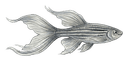
Turbo’s Logbook Card
Zebra danio · resident fact-checker
Turbo reads the fact books. All of them. Twice! He has a list of the best facts and a second list of facts he has checked, and the second list is shorter, and that bothers him.
The goldfish memory one, for example. Three seconds! Not true! Goldfish learn feeding times. He checked. Then he checked again, because once is a rumour and twice is a result.
So here is his advice for fact kids. Read everything. Keep a list. And when a fact sounds too good, find a second book that says it too.
What goes wrong with fact-loving readers
Treating novels as the only proper reading
A child who hears that fact books do not count decides they are not a reader. They are, and a good one.
Count every page. Offer stories as an extra, never as the real thing they are failing at.
Mistaking dipping for not reading
Fact books are not read cover to cover, and that is how they are designed. Index, page, table, back again tomorrow.
Ask what they found instead of how far they got.
Buying only trivia
Fact-a-page books are fun and fast, and they rarely say why anything is true. A whole shelf of them teaches recitation, not understanding.
Pair each trivia book with one that explains a system: an ocean reference, a comparison book, a comic that walks through evolution.
Letting a myth through because it is in a book
The three-second goldfish memory and the idea that sharks are mindless killers both still turn up in print.
Make checking a game. A child who catches a book out learns more than one who memorises it.
Forcing a novel as the next step
Pushing a classic adventure story on a fact-first child usually ends with the book abandoned at chapter two.
Start fiction where the facts live: stories about real animals, real places and real science, with the true parts left in.
Questions we get asked
What books are good for 8-year-olds who like facts?
Comparison books like Who Would Win? Killer Whale vs. Great White Shark, references like National Geographic Kids Ultimate Oceanpedia, and dip-in books like the National Geographic Kids Almanac. Animalium suits a child who likes museums, and Science Comics: Sharks suits one who also likes comics.
Is it OK if my child only reads nonfiction?
Yes. Nonfiction is real reading, and it builds skills school relies on, such as using headings, tables and diagrams. In one study, 84% of first graders chose nonfiction when picking a book to keep. Offer fiction alongside it without making it a condition.
How do I get a fact-loving child to read fiction?
Start where the facts are. Choose stories about the animals, places or science they already love, where the real details are kept. Read the first one aloud together. Tell them which parts are true, since for a fact-loving child that is the reason to keep going.
What are the Who Would Win books?
A Scholastic series by Jerry Pallotta, illustrated by Rob Bolster, that compares two animals side by side on size, weapons and behaviour before naming a likely winner. The killer whale and great white shark title is listed for ages 7 to 10. They suit children who like to argue.
Are Weird But True books good for 8-year-olds?
They are listed for ages 8 to 12 and work well for dipping in and out. Each page gives a short fact without much explanation. Pair them with a reference book that explains the why, and teach your child to check any fact that sounds too strange against a second source.
Is it normal for a child to be obsessed with one topic?
Very. A 2007 study by Judy DeLoache and colleagues found nearly a third of young children develop an extremely intense interest, often before age two. It is common and healthy. Use it: go deep on that topic first, then widen outward to related animals or subjects.
What reading level is If the World Were a Village?
Kids Can Press lists it at Guided Reading level R, around fourth grade, with a Lexile of 840L. A keen 8-year-old can read it with help, and it works well as a shared book, because the numbers invite questions about food, water and energy around the world.
Are the George the Cranky Guppy books fiction or fact?
Both, in a way. They are funny chapter books for ages 7 to 10 about a talking guppy, so the story is fiction. The water chemistry and fish biology are real, written by marine biologist Yechiel Kuperman, which makes them a good first story for a fact-first reader.
Sources
- Mohr 2006Mohr, K. A. J. (2006). Children's choices for recreational reading: A three-part investigation of selection preferences, rationales, and processes. Journal of Literacy Research 38(1). View sourceNote: First graders choosing from nine picture books. Older children's preferences may differ.
- Duke 2000Duke, N. K. (2000). 3.6 minutes per day: The scarcity of informational texts in first grade. Reading Research Quarterly 35(2). View sourceNote: US classrooms observed around 2000. Curricula have added informational text since.
- DeLoache 2007DeLoache, J. S., Simcock, G. & Macari, S. (2007). Planes, trains, automobiles—and tea sets: Extremely intense interests in very young children. Developmental Psychology 43(6), 1579–1586. View sourceNote: Parent reports on 177 young children. Intense interests were more common in boys.
About the author
Yechiel Kuperman
Marine Biologist & Aquaculture Mentor
Yechiel has kept fish since he was four — 49 years with tanks — and 30+ years running farms. He mentors fish farmers internationally.
He writes the Yechiel's Fishery Farm books, in which the biology is real and the fish have opinions.
Last checked: