STEM Books for Kids Who Don't Like Science (Yet)
By Yechiel Kuperman, marine biologist · 49 years keeping fish
Quick answer
A child who says they hate science has usually met science as a list — vocabulary, diagrams, facts lined up to be memorised for a test — and lists are the format human memory likes least.
The bridge back is story: a book in which a character needs the science, so the concept arrives as part of the plot instead of as homework.
Start from a question your child already asks, and never announce that a book is educational.
The numbers
| The move | Why it works | Where it goes wrong |
|---|---|---|
| Fiction where the science carries the plot | The concept arrives because the story needs it | If the science is removable decoration, nothing gets smuggled |
| Narrative nonfiction — discovery told as a story | Real facts get the cause-and-effect shape memory prefers | A fact list with better pictures is still a fact list |
| Starting from a question they actually asked | Curiosity supplies the motivation for free | Starting from the curriculum restarts science class at home |
| Funny before worthy | Laughter carries a reader across the hard ideas | Following the joke with a quiz turns it back into a lesson |
| Splitting science from science class | A child can dislike the lesson and keep the subject | Insisting science is fun tells them their experience was wrong |
| Leaving one question open at the end | An unanswered why is the reason to open the next book | Explaining everything closes the door you just opened |
Do this — step by step
- Ask what exactly is boring about science, and believe the answer.It is nearly always the memorising, not the material
- Start from a question they have asked out loud, however small.Why do fish not sink counts
- Pick a book where a character needs the science, not a book that presents it.
- Go funny before you go worthy — the same rule that works for reluctant readers.
- Read it as a story: no quiz after the chapter, no checking what was learned.
- Answer the question they ask next, and only that one.The next question is the whole game
- Never say the word educational within earshot of the book.
- Let them go on disliking science class. Defend the subject, not the lesson.
Why would a curious child decide science is boring?
Nobody is born bored by science. Small children run on why — why is the sky blue, why do fish not drown, why does ice float — and every one of those is a scientific question asked by someone who does not yet know the word science.
Then, somewhere in the middle of primary school, the subject arrives with its own name. And it often arrives in the least lovable format there is: vocabulary to learn, diagrams to label, facts standing in a row with the connections between them filed off.
Facts in a row are the format human memory handles worst. Cognitive scientists describe stories as psychologically privileged: causes, effects and a character who wants something are easier to follow, and easier to remember, than the same material arranged as a list.
Here is the twist: science is not actually a list. It is the best collection of cause-and-effect chains we have — this happens because of that, and we can check. The list is just what is left after the story of finding out has been removed.
Which is why a child can reject science on Tuesday and spend Saturday absorbed in how sharks smell blood, without feeling any contradiction. They are not rejecting the material. They are rejecting the format the material came in.
Story-first science books work by putting the causation back. A character needs to know why the water turned cloudy, and the invisible bacteria in the filter become the answer to a problem the reader already cares about instead of item four on a worksheet.
There is honest evidence behind this. In one experiment, pupils who read science as a discovery story — a scientist with a question, wrong turns included — understood and remembered more than pupils given the same content as a standard textbook passage.
Interest research adds the second half: interest starts situational — one funny book, one good question — and only becomes personal, the kind a child carries around, if it keeps getting fed. A single book will not make a scientist. It reopens the door.
The other documented pattern is what happens to the questions. Young children ask them constantly; observation studies of classrooms find expressions of curiosity become rare as children move up the school. The questions do not run out. They go quiet where asking stops paying.
So the parent's job is smaller than it looks. You are not teaching the curriculum. You are keeping one channel open — their own questions, answered in story form — until the label boring falls off a subject that never deserved it.
By the way, out in the ocean…
Octopus. One of the ocean's cleverest animals: eight arms, three hearts, and skin that changes colour to vanish in plain sight. A child who 'doesn't like science' has usually just not met the octopus yet — wonder first, vocabulary later.
Jellyfish. Drifting through the sea with no brain and no heart — and some kinds glow with their own light. No brain, no heart, thriving for millions of years — one weird true fact can reopen a whole subject.
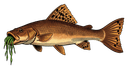
Plecy’s Logbook Card
Plecostomus · methodical algae specialist
Plecy cleans algae in slow, straight, dedicated rows, and he would like it known that he has never once found this boring. People see a chore. He sees visible progress, done properly.
Nobody ever taught him a unit on bacteria, either. He shares his tank with Professor Nitra's invisible workers, a story got told about it, and that is how the whole business of the filter became interesting — sideways, through a plot.
His advice, delivered slowly: nothing is boring up close. A child who says science is boring has only been shown the far-away version.
What goes wrong when parents push science
Buying the giant encyclopedia of everything
A 400-page reference book is a gift that looks like generosity and lands like a syllabus. It gets browsed once and then holds the shelf down.
Reference books suit children who already love the subject and want more of it. For a child who has gone off science, a story with one idea inside it does the actual work.
Announcing that a book is educational
The whole mechanism of a story-first science book is that the concepts travel inside the story. Saying this one is educational unpacks the suitcase at the border.
Hand it over as a funny book about a cranky fish, because that is what it is. What else is inside it can stay your secret.
Quizzing them after the chapter
So what did we learn about bacteria? converts, in one sentence, a story into a lesson and a reader into a pupil. The child notices, and reads the next chapter defensively, if at all.
If you want to know whether it landed, wait. Load-bearing science resurfaces on its own — usually at dinner, weeks later.
Arguing that science is actually fun
Their experience is real: the class was boring. Arguing tells them their judgement is wrong, and children defend their judgements harder than adults do.
Agree with them about the class, then leave the right book lying around. Splitting the subject from the lesson is the concession that wins.
Turning a spark into a curriculum
The child mentions sharks once, and within a week there are three workbooks, a documentary schedule and a museum trip. Interest is a spark; this is a bucket of water dressed as firewood.
Feed it one book at a time and let them set the pace. The moment an interest becomes your project, it stops being theirs.
Questions we get asked
My child loves reading but says science is boring — what happened?
Almost certainly science class happened. The subject usually arrives as vocabulary and facts to memorise, which is the format memory likes least — and a child who bounces off the format concludes they dislike the subject.
Reintroduce it in the format they already love. A story with real science inside does not read as science.
What are good science books for kids who hate science?
Story first, one concept at a time, genuinely funny, with the science doing a job in the plot rather than sitting in fact boxes. Narrative nonfiction — discovery told as a story — works for the same reason.
The test: could you delete the science and keep the plot? If yes, keep looking.
Can a made-up story teach real science?
Yes, if the science is real and load-bearing. A talking fish is a frame children handle easily; what matters is that the water chemistry underneath behaves like actual water chemistry.
Children are practised at splitting a fantasy wrapper from its factual cargo — nobody comes away believing fish talk, and plenty come away knowing what a filter does.
My child likes science but hates science class — should I worry?
No — it may be the most scientifically respectable position in the room. The class is a delivery format; the subject is the ocean of cause and effect underneath it, and disliking one says nothing about the other.
Keep the home supply line open with books and questions, and let school be school.
Do fact books and record books count as STEM reading?
They count — browsing a fact book is real reading and real curiosity, and for some children the astonishing-numbers route is the way in.
They do a different job than narrative, though: facts stick better with a story attached. Let the fact book spark the question and a story answer it.
How do I get my child interested in STEM without pushing?
Start from a question they have already asked and answer it properly — one question, one answer, then stop. Interest grows from being fed at its own pace, not from being scheduled.
Books do the patient part: leave the right one around and let it be discovered rather than assigned.
Are the George the Cranky Guppy books actual science?
Yes — the stories are fiction and the science is not. The nitrogen cycle, the water chemistry and the fish behaviour in them are the same ones our aquarium-care guides teach straight.
The books are short, funny, generously spaced, written for ages 7–10 — and the science is load-bearing, not decorative.
Sources
- willingham2004Willingham, D. T. (2004). Ask the Cognitive Scientist: The Privileged Status of Story. American Educator, Summer 2004.Note: A review of memory research, not a trial of science books — the source of the claim that story-shaped material is easier to follow and recall.
- arya-maul2012Arya, D. J. & Maul, A. (2012). The role of the scientific discovery narrative in middle school science education: An experimental study. Journal of Educational Psychology 104(4), 1022–1032.Note: The experiment behind the discovery-story claim: pupils reading science as a scientist's story outperformed those reading a conventional expository version. Middle-schoolers — slightly older than our readers.
- hidi-renninger2006Hidi, S. & Renninger, K. A. (2006). The Four-Phase Model of Interest Development. Educational Psychologist 41(2), 111–127.Note: A framework synthesising the interest research — how a triggered situational interest can grow into a lasting personal one — not a single controlled trial.
- engel2011Engel, S. (2011). Children's Need to Know: Curiosity in Schools. Harvard Educational Review 81(4), 625–645.Note: Observational: expressions of curiosity were strikingly rare in the classrooms studied, and rarer in older grades. It documents the decline; it does not by itself explain it.
- dahlstrom2014Dahlstrom, M. F. (2014). Using narratives and storytelling to communicate science with nonexpert audiences. Proceedings of the National Academy of Sciences 111 (Supplement 4), 13614–13620.Note: A review of narrative in science communication — conducted on nonexpert adult audiences. We borrow the mechanism, not the population.
About the author
Yechiel Kuperman
Marine Biologist & Aquaculture Mentor
Yechiel has kept fish since he was four — 49 years with tanks — and 30+ years running farms. He mentors fish farmers internationally.
He writes the Yechiel's Fishery Farm books, in which the biology is real and the fish have opinions.
Last checked: