Books for Kids Who Love Animals (That Get the Animals Right)
By Yechiel Kuperman, marine biologist · 49 years keeping fish
Quick answer
The best books for a child who loves animals are the ones a zoologist or a keeper would recognise: real bodies, real behaviour, real needs.
Talking animals are fine. The trouble is a book where the biology is missing or wrong, because young children take those details at face value.
Nicola Davies, Steve Jenkins and Eric Carle are safe places to start, and a goldfish in a round bowl is the quickest warning sign on any page.
The numbers
| Book | Ages | What it gets right |
|---|---|---|
| Surprising Sharks by Nicola Davies, illustrated by James Croft | 4–8 | Written by a trained zoologist. Takes the scary-shark myths apart with real anatomy and behaviour |
| One Tiny Turtle by Nicola Davies, illustrated by Jane Chapman | 4–8 | A loggerhead's life from hatchling to the beach where she was born, told as a story with the real facts in it |
| Big Blue Whale by Nicola Davies, illustrated by Nick Maland | 4–7 | Size, diet, babies and lifespan of the largest animal alive, pitched for reading aloud |
| What Do You Do with a Tail Like This? by Steve Jenkins and Robin Page | 4–8 | A Caldecott Honor Book. Guess the animal from its nose, ears or tail, then learn what that part is for |
| Actual Size by Steve Jenkins | 4–8 | Animals drawn at their true size, from a giant earthworm to a crocodile's jaws. Measurement and biology at once |
| A House for Hermit Crab by Eric Carle | 4–6 | Built on real hermit-crab behaviour: outgrowing a shell and moving on. Sea-creature facts at the back |
| Ocean Sunlight by Molly Bang and Penny Chisholm | 4–8 | Co-written by an MIT ocean scientist. How tiny drifting plants feed everything in the sea, whales included |
| Shark Lady by Jess Keating, illustrated by Marta Álvarez Miguéns | 4–8 | The true story of Eugenie Clark, who studied sharks for a lifetime. Shows a real scientist doing real work |
| Tiny Creatures by Nicola Davies, illustrated by Emily Sutton | 5–8 | Microbes, the animals nobody can see. The right next book for a child who asks what lives in the water |
Do this — step by step
- Before you buy, check who wrote it and whether they have studied or kept the animal.The author note on the back flap tells you
- Look for a page of real facts at the back, then check two of them.
- Count a goldfish in a round bowl as a warning about the rest of the book.
- Keep the talking animals, as long as the biology underneath them is right.
- Pair every animal story with one true book about the same animal.Story first, then the real thing
- Let your child catch a book's mistakes, and make a game of it.
- Answer the next question with the real animal: a video, an aquarium, a zoo.
- Choose the next book by the animal they keep asking about.
Do talking-animal books teach children the wrong things about animals?
There is research on exactly this, and the answer depends on the book. A fish that talks is harmless. A fish drawn in a bowl with no filter teaches something false, and a small child has no way to tell which parts of the page were meant seriously.
In 2014, Patricia Ganea and colleagues read picture books about unfamiliar animals to children aged 3 to 5. Children who heard the animals described in human terms were more likely to credit real animals with human traits afterwards, and the youngest learned fewer of the facts.
A 2016 study looked at what commercial animal storybooks actually contain. Megan Geerdts and colleagues found that none of the anthropomorphic books they examined gave a scientifically accurate explanation of how the animal works. The pages were about feelings and friendships. The biology was absent.
The same group also found that anthropomorphic pictures and words did not always stop children learning real facts. So the fair reading is narrow. A talking animal is a costume, and children see through costumes. What they keep is whatever the book shows about the body underneath.
Fish get the worst of it. The same few pictures travel from book to book: the round goldfish bowl, the fish sipping cheerfully at the surface, the tank with no filter, no heater and no plants. Each one is wrong in a way that matters to a real fish.
The bowl first. A single fancy goldfish needs about 75 litres (20 US gallons), and a common goldfish can grow to 25–30 cm (10–12 inches) with the space to do it. A bowl has no room for a filter big enough to handle the waste, so ammonia builds up and the fish's life shrinks with the water.
Then the surface. In most fish, gulping at the top is an emergency: the water is short of oxygen. The exceptions are bettas and gouramis, which have a labyrinth organ and breathe air by design. A book that gives every fish their habit is teaching children to miss a warning sign.
Then the empty tank. A filter is home to the bacteria that turn toxic ammonia into safer compounds, and a new tank takes weeks to grow them. A picture with no filter is a picture of a tank that will not stay alive, however happy the fish look.
The books in the table share one habit: their authors went and looked. Nicola Davies trained as a zoologist. Penny Chisholm is an MIT professor who studies the ocean's smallest plants. Eugenie Clark, the subject of Shark Lady, spent her working life diving with sharks.
We hold our own books to the same test. George the guppy complains constantly, and real guppies do not. But the water around him behaves like real water, because the author has kept fish for 49 years and writes the chemistry he has watched happen.
By the way, out in the ocean…
Seahorse. The fish that swims standing up — and among seahorses, it is the dads that carry the babies. Eric Carle's Mister Seahorse is built on this true fact, which is why it sits happily on any shelf of animal books that get it right.
Shark. Great whites get the headlines, but the biggest shark of all — the whale shark — is a gentle giant that eats plankton. Nicola Davies' Surprising Sharks is full of facts like this one. The truth about an animal is often the most surprising part of the book.
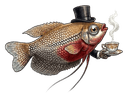
Sir Bubbleton’s Logbook Card
Gourami · breathes air, and is entitled to
Sir Bubbleton has read the fish books, and he has notes. Page after page of fish gulping at the surface, cheerfully, as if it were a hobby. For most fish that is an emergency. It means the water has run short of oxygen.
He, however, is a gourami. He carries a labyrinth organ and takes a sip of air from the top now and then, entirely by design. He would like the books to learn the difference, and to stop lending his manners to fish who cannot afford them.
What goes wrong when parents buy animal books
Buying on the cover animal alone
A cute otter on the cover says nothing about what is inside. A lot of animal storybooks are stories about friendship with an animal costume on top.
That is fine at bedtime. For a child who loves animals, pair it with one book where the animal itself is the subject.
Trusting the fact page without checking
A page of facts at the back is a good sign, and only a sign. Check two of them against a museum, aquarium or university website.
If one is wrong, treat the rest of the book as a story and look elsewhere for the science.
Letting the book set up the pet
The bowl in the picture book becomes the bowl in the shopping basket. Children ask for what they have seen, and they have seen a lot of bowls.
Before a book turns into a pet request, read one true book about what that animal needs, together, and let the numbers do the arguing.
Banning the favourite book for one mistake
If a beloved story has a goldfish in a bowl, keep the story. Point it out once, ask what the fish would really need, and move on.
Children love catching a grown-up book out. A mistake spotted on page six is remembered for years.
Stopping at picture books
Around 7, many animal-mad children are ready for chapter books with real science inside, and the picture-book shelf starts to feel young to them.
Moving up keeps the interest growing. Stay with the animal they love and change only the format.
Questions we get asked
What are good books for kids who love animals?
Look for books by people who have studied or kept the animal. Nicola Davies' Read and Wonder books, Steve Jenkins' Actual Size and What Do You Do with a Tail Like This?, and Eric Carle's A House for Hermit Crab all fit, for roughly ages 4 to 8.
Are talking-animal books bad for children?
No. The research points at the biology, not the talking. Children handle a talking fish easily, but they do absorb what a book shows about bodies and needs. Keep the funny stories, and check that the animal underneath behaves like the real one.
Why do so many children's books show a goldfish in a bowl?
Habit. The round bowl has been the cartoon shorthand for a pet fish for generations. It is also wrong: one fancy goldfish needs about 75 litres (20 US gallons) with a filter, and a bowl cannot hold one. Use the picture as a conversation starter.
How can I tell if an animal book is accurate?
Check the author note for a science or keeping background, look for a fact page at the back, and test two facts against a museum or aquarium site. Watch for the classic errors: fish in bowls, fish gulping at the surface, and tanks with no filter.
What age are Nicola Davies' animal books for?
Most of her Read and Wonder picture books are listed for about ages 4 to 8. Surprising Sharks, One Tiny Turtle and Big Blue Whale are good first picks. She trained as a zoologist, and the stories carry real natural history without feeling like a lesson.
What should my child read after animal picture books?
Around 6 or 7, try books that mix story and science, like The Magic School Bus series, then first chapter books. Stay with the animal your child loves and change the format, so the interest grows with them instead of staying on the toddler shelf.
Are the George the Cranky Guppy books accurate about fish?
The fish talk and complain, so the stories are fiction. The water chemistry, the filter bacteria and the fish behaviour are real, written by an author who has kept fish for 49 years. They are chapter books for ages 7 to 10, not picture books.
Sources
- ganea2014Ganea, P. A., Canfield, C. F., Simons-Ghafari, K. & Chou, T. (2014). Do cavies talk? The effect of anthropomorphic picture books on children's knowledge about animals. Frontiers in Psychology 5, 283. View sourceNote: Children aged 3 to 5 in a lab setting, with novel animals. The effect on fact learning was clearest in the youngest.
- geerdts2016-eedGeerdts, M., Van de Walle, G. & LoBue, V. (2016). Using Animals to Teach Children Biology: Exploring the Use of Biological Explanations in Children's Anthropomorphic Storybooks. Early Education and Development 27(8), 1237–1249. View source
- geerdts2016-icpGeerdts, M. S., Van de Walle, G. A. & LoBue, V. (2016). Learning About Real Animals From Anthropomorphic Media. Imagination, Cognition and Personality. View sourceNote: The counterweight: here anthropomorphic words and pictures did not interfere with factual learning. The evidence is mixed, and the page says so.
- fancy-goldfishAquarium Co-op. Care Guide for Fancy Goldfish (tank size: 20 US gallons for the first fish, about 10 more per additional fish). View sourceNote: A hobbyist consensus figure, not a regulation. Common (single-tail) goldfish need far more room, ideally a pond.
About the author
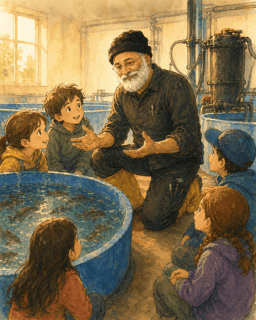
Yechiel Kuperman
Marine Biologist
Yechiel has kept fish since he was four — 49 years with tanks — and 30+ years running farms.
He writes the Yechiel's Fishery Farm books, in which the biology is real and the fish have opinions.
Last checked: