Best Fish for a Classroom Tank: Species That Actually Work in Schools
By Yechiel Kuperman, marine biologist · 49 years keeping fish
Quick answer
The best fish for classroom tanks are small, peaceful species that mature under 3 inches, accept once-daily feeding, and exhibit observable behaviors students can track. Avoid species requiring specialized diets, frequent feeding, or large adult sizes.
Top recommendations include white cloud mountain minnows, zebra danios, and cherry barbs — all hardy, active, and visually engaging without demanding complex care routines.
Stock at 1 inch of fish per gallon maximum, introduce juveniles rather than adults, and choose species with mid-water swimming patterns that maximize student observation opportunities.
Download the printable pack
Chapter-by-chapter science notes for Book 1, including why every species has its own tolerance range and how to match an animal to the right water, with key vocabulary and four low-prep activities.
Book 1 Teacher Notes: tolerance ranges and the right waterPDFWhich NGSS standards does this address?
These are performance expectations the unit gives you an opportunity to address — not standards it teaches on its own. Around 44 states use NGSS or standards derived from it, so check these against your own framework.
- K-LS1-1Use observations to describe patterns of what plants and animals (including humans) need to survive.
- 2-LS4-1Make observations of plants and animals to compare the diversity of life in different habitats.
- 3-LS3-2Use evidence to support the explanation that traits can be influenced by the environment.
- 5-LS2-1Develop a model to describe the movement of matter among plants, animals, decomposers, and the environment.
The numbers
| Species | Adult size (metric) | Adult size (US) | Why it works (or doesn't) |
|---|---|---|---|
| White Cloud Mountain Minnow | 3.5–4 cm | 1.4–1.6 in | Peaceful, hardy, accepts flake food, visible mid-water swimming |
| Zebra Danio | 5–6 cm | 2–2.4 in | Very hardy, active swimmers, tolerate temperature swings, observable breeding behaviour |
| Cherry Barb | 4–5 cm | 1.6–2 in | Peaceful schooling fish, vibrant colour, accepts a varied diet, visible colour changes |
| Platy | 5–7 cm | 2–2.8 in | Livebearers show reproduction, accept vegetable-based foods, tolerate beginner mistakes |
| Avoid: Oscar, common pleco, red-tail shark | 15–60 cm | 6–24 in | Too large, territorial, or on specialised diets that clash with classroom constraints |
Do this — step by step
- Research species adult size and select only those maturing under 3 inches to prevent overcrowding.Check multiple sources — pet store labels often underestimate growth potential
- Prioritize peaceful community species over territorial or aggressive varieties for student safety.Observe fish behavior in store tanks when possible before purchase
- Choose species that accept standard tropical fish flakes or pellets for once-daily feeding simplicity.Avoid species requiring live/frozen foods or vegetable-only diets that complicate student feeding rotas
- Select fish with visible, observable behaviors like schooling, color changes, or active swimming patterns.These behaviors create natural teaching opportunities and student engagement moments
- Stock juveniles rather than adults to allow growth observation and better adaptation to tank conditions.Juveniles adjust more easily to new water parameters and establish territory less aggressively
- Introduce fish in small groups of the same species rather than mixed-species communities initially.Single-species groups establish social hierarchies faster and reduce stress during introduction
- Implement a simple feeding rota: one measured portion per day, same time, supervised by rotating student pairs.Overfeeding is the #1 cause of classroom tank crashes — measure portions precisely
- Create observation sheets for students to track fish behaviors, color changes, and interactions over time.Connect observations to NGSS standards on structure/function and information processing
- Monitor water parameters weekly and involve students in testing and recording ammonia, nitrite, and pH levels.Turn maintenance into a genuine scientific investigation with reproducible data collection
- Plan for long-term care: identify rehoming options before stocking and establish clear end-of-year procedures.Document agreements with families, other classrooms, or local shops that accept returns
What biological traits make certain fish species better suited for classroom environments?
Species suitability for classroom aquariums depends on biological characteristics that align with educational constraints and objectives. Size is paramount — fish maturing under 3 inches prevent overcrowding in standard 10-20 gallon classroom tanks while still providing observable individuals.
Feeding biology critically impacts classroom feasibility. Species accepting standard commercial foods enable simple, measurable feeding protocols suitable for student rotas.
Those requiring specialized live foods, frequent feedings, or vegetable-only diets create logistical complications that often lead to inconsistent care.
Behavioral traits determine educational value. Mid-water swimmers maximize visibility in standard tank views.
Schooling species demonstrate natural social behaviors, and fish exhibiting color changes or visible breeding activities create tangible observation opportunities that connect directly to life science standards.
Stress tolerance is essential given the inevitable fluctuations in classroom environments. Species tolerating temperature variations, brief periods without feeding, and minor water parameter shifts survive the realities of school schedules, weekend gaps, and occasional maintenance delays.
Reproductive biology presents both opportunities and considerations. Livebearers like platies and guppies offer observable reproduction opportunities but may require population management strategies. Egg-layers often display more subtle breeding behaviors but avoid overpopulation concerns in limited-space environments.
Sensory capabilities influence what students can observe and measure. Species with lateral line sensitivity respond to vibration and movement, creating opportunities to study stimulus-response relationships. Those with color vision demonstrate observable responses to environmental changes and social interactions.
Longevity and hardiness factors affect sustainability. While extremely long-lived species create rehoming challenges, moderately hardy fish with 3-5 year lifespans provide sufficient time for meaningful observation while remaining feasible for eventual rehoming or retirement.
Disease resistance varies significantly between species and impacts success rates. Choosing naturally hardy specimens reduces losses and maintains population stability throughout the school year, preserving continuity for ongoing observation and data collection projects.
Ultimately, the best classroom fish balance biological practicality with educational opportunity — they thrive within constraints while providing rich, observable phenomena that support genuine scientific inquiry and engagement with living systems.
By the way, out in the ocean…
Sea turtle. Ancient mariners — their kind has crossed the oceans for over 100 million years, migrating thousands of kilometres. Sea turtles demonstrate how species size and diet specialization create habitat constraints — lessons applicable to classroom stocking decisions.
Octopus. One of the ocean's cleverest animals: eight arms, three hearts, and skin that changes colour to vanish in plain sight. Octopuses show why feeding complexity matters: their specialized diets rule them out of simple classroom feeding routines, however clever they are.
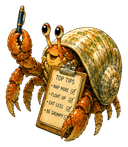
Pinchy’s Logbook Card
Hermit crab · property inspector, reluctantly
Pinchy examines the proposed stocking list with his usual thoroughness, noting several potential concerns about long-term tank stability. He begins with size projections, converting metric measurements to anticipate actual adult dimensions.
He appreciates the focus on peaceful species but questions whether the selected numbers account for territorial behaviors that may emerge as fish mature and establish breeding territories within the limited classroom tank space.
His professional assessment, delivered with characteristic hesitation: the stocking plan shows promise for sustainability if feeding protocols are strictly followed and observation data is used to adjust populations as needed.
Common stocking mistakes that undermine classroom aquarium success
Choosing fish based on adult store tank appearance
Juvenile fish in display tanks often look nothing like their adult forms, leading to unpleasant surprises when 'small' tetras grow into 6-inch predators that eat smaller tank mates. Always research adult size before purchasing.
Store lighting and feeding regimens enhance colors and behaviors that may not replicate in home aquariums, creating mismatched expectations about visibility and interaction levels.
Overstocking to maximize visible fish count
The temptation to buy 'a nice group' often results in dangerous overcrowding that stresses fish, depletes oxygen rapidly, and overwhelms biological filtration capacity. Remember: 1 inch of fish per gallon is a maximum, not a target.
Overcrowded tanks require extraordinary maintenance efforts that exceed what classroom rotas can reliably provide, leading to parameter crashes and fish losses that undermine educational objectives.
Selecting specialized diet species without considering feeding logistics
Fish requiring live foods, frequent vegetable preparation, or specialized sinking pellets create feeding complications that student rotas cannot consistently maintain, leading to malnutrition or overfeeding when substitutes are used.
The time and expertise needed for specialized feeding often exceed what teachers can reasonably expect from student volunteers, creating care gaps that manifest as water quality issues.
Ignoring social compatibility and territorial behaviors
Species that school peacefully as juveniles may develop aggressive territorial behaviors as adults, particularly around breeding territories. What begins as a harmonious group can evolve into constant chasing, fin nipping, and stress-induced immune suppression.
Bottom-dwellers like cichlids often establish complex hierarchies that require substantial territory per individual, quickly exceeding the carrying capacity of standard classroom aquariums regardless of initial group size.
Questions we get asked
How many fish can I safely keep in a 10-gallon classroom tank?
Follow the 1 inch per gallon rule: approximately 10 inches of adult fish maximum. For 2-inch adult fish, this means 5 fish total. Remember to count based on expected adult size, not purchase size.
Start conservative — you can always add more later if parameters remain stable and observations show adequate territory and resources per individual.
Should I buy all the fish at once or add them gradually over time?
Add fish gradually over 2-3 weeks to allow biological filtration to adjust to the increasing bioload. This approach prevents ammonia spikes and gives you time to observe compatibility before full commitment.
Monitor water parameters after each addition and only proceed with more fish when ammonia and nitrite remain at zero for several consecutive days.
Are livebearers like guppies and platies suitable for classroom tanks?
Yes, with important considerations. Livebearers reproduce readily, which can overwhelm small tanks and create rehoming challenges. Plan for population management from the start — consider single-sex groups or have rehoming agreements in place.
Their reproductive behaviors offer excellent observation opportunities for life science lessons, but require proactive planning to prevent overpopulation.
How do I handle fish aggression or bullying in the classroom tank?
First, confirm it's genuine aggression (fin damage, persistent chasing) rather than normal dominance displays. Temporary separation of the aggressor often resets social hierarchies without permanent removal.
If aggression persists, rehome the problematic individual — keeping a bully in the tank stresses other fish, suppresses feeding, and can lead to secondary infections from stress-related immune suppression.
What role should water temperature play in species selection for unheated classrooms?
Prioritize subtropical species tolerant of 65-75°F ranges if your classroom lacks reliable heating. Tropical species requiring 78°F+ will suffer stress and increased disease susceptibility in cooler environments.
Consider seasonal variations — many schools cool significantly over breaks, so choose species tolerant of the lowest expected temperatures rather than average temperatures.
Can I mix different species from the same geographic region?
Geographic origin alone doesn't guarantee compatibility — research specific species interactions regardless of shared regions. A South American tetra may not school well with a South American cichlid, for example.
Focus on behavioral compatibility (schooling tendencies, aggression levels, feeding zone preferences) rather than geographic origin when building your community.
How do I involve students in responsible fish selection and stocking decisions?
Turn species research into a classroom project: have students investigate adult size, feeding requirements, and behavioral traits of candidate species before voting on final selections.
Use the decision-making process to teach resource allocation, compromise, and evidence-based decision making — skills that transfer far beyond aquarium management.
What are the best observable behaviors for student engagement and learning?
Mid-water swimming patterns maximize visibility, schooling behaviors demonstrate social dynamics, and color changes (particularly in response to mood or breeding conditions) create tangible observation opportunities.
Feeding responses, territorial displays, and reproductive behaviors (when appropriate and properly contextualized) all offer rich data collection opportunities that connect to multiple NGSS standards.
Sources
- Allen 2011Allen, G. R., Midgley, S. H. & Allen, M. (2011). Field Guide to the Freshwater Fishes of Australia. Western Australian Museum, Perth.
- Froese & Pauly 2023Froese, R. & Pauly, D. (2023). FishBase. World Wide Web electronic publication. www.fishbase.org, version (02/2023). View source
- Lieske & Myers 1994Lieske, E. & Myers, R. F. (1994). Collins Pocket Guide. Coral Reef Fishes. Indo-Pacific & Caribbean. HarperCollins Publishers.
- Nelson 2006Nelson, J. S. (2006). Fishes of the World. John Wiley & Sons, Inc. View source
About the author

Yechiel Kuperman
Marine Biologist & Aquaculture Mentor
Yechiel has kept fish since he was four — 49 years with tanks — and 30+ years running farms. He mentors fish farmers internationally.
He writes the Yechiel's Fishery Farm books, in which the biology is real and the fish have opinions.
Last checked: