Yechiel's Science Corner
Aquarium Science, Answered for Curious Kids

Yechiel Kuperman
Marine Biologist · 49 years in the field
July 2026
4 min read
The five aquarium questions kids ask most, answered simply: the nitrogen cycle, euryhaline mollies, labyrinth-organ breathing, whether algae eaters really clean a tank, and why sudden water changes stress fish.
These are the five questions children ask me most often at the Fishery Farm. Each one has a real answer — the same answer I would give a marine biology student, just without the long words getting in the way.
What is the nitrogen cycle? Fish waste releases ammonia, which is toxic. Helpful bacteria living in the filter and gravel eat that ammonia and turn it into nitrite, then other bacteria turn nitrite into nitrate, which is far less harmful and gets removed by plants and water changes. Every healthy aquarium runs on these invisible bacteria — they are the real cleaning crew. (Book 8, Plecy Meets Professor Nitra, is an entire story about them.)
Why can mollies live in fresh AND salt water? Mollies are euryhaline, meaning their bodies can adjust to fresh, brackish, and salt water. Their kidneys and gills actively balance how much salt and water stays inside them — a process called osmoregulation. Most fish can only do this for one kind of water; mollies, like our own Madame Molly, adjust and carry on.
Why do gouramis breathe air at the surface? Gouramis carry a labyrinth organ — a folded breathing chamber above the gills — that lets them take oxygen directly from air. They evolved in warm, still waters where dissolved oxygen runs low, so gulping air at the surface is normal and healthy. That is why Sir Bubbleton conducts his morning ceremony at the surface, teacup optional.
Do algae eaters really clean your tank? Partly. A plecostomus rasps algae off glass and wood all day, and it genuinely helps — but no fish replaces filtration or water changes, and a growing pleco needs its own food, like vegetables and sinking wafers. An algae eater is a helpful janitor, not a cleaning service. Anyone who tells you otherwise has not met Plecy's appetite.
Why do fish get stressed when water changes suddenly? A fish's body constantly balances the water and salts inside it against the water outside. Change the temperature or chemistry suddenly and the fish must re-balance everything at once, which burns energy and weakens it. That is why we acclimate new fish slowly — and why George files a formal complaint whenever anyone touches his water.
— Yechiel Kuperman, Marine Biologist, 49 years in the field
Dispatched from the Fishery Farm by
Yechiel Kuperman
Marine Biologist · 49 years in the field
Keep reading
More from the Bog
 Fishery Tales
On Luck, Colour, and Breathing First
Madame Molly, a lyretail black molly, offers gentle thoughts on luck, colour, and moving comfortably between fresh, brackish, and salt water.
 Madame Molly5 min
 Fishery Tales
Sir Bubbleton's Journal of Civilised Observations
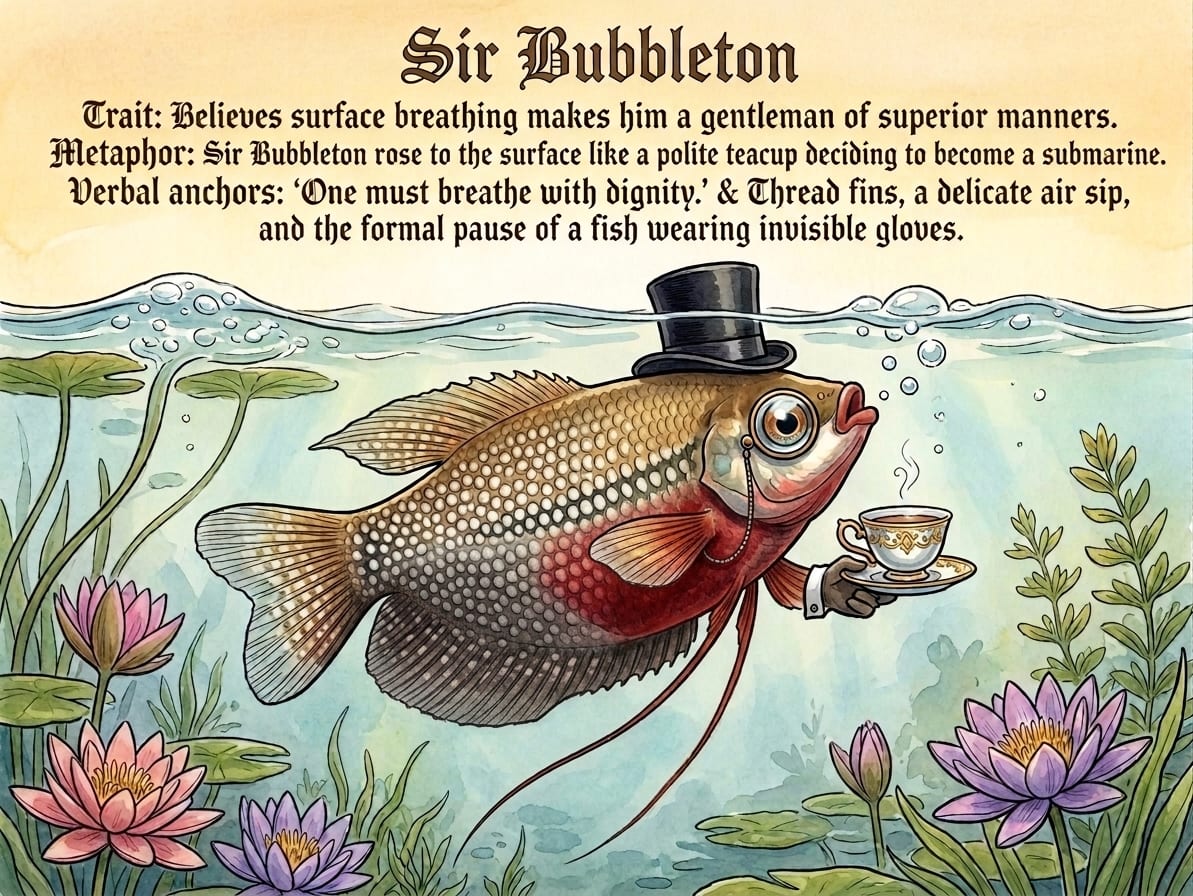
Sir Bubbleton the Gourami explains the labyrinth organ that lets him breathe air at the surface — and why his surface breath is a necessity, not a tea-time choice.
Sir Bubbleton7 min Fishery Tales
I Have Checked For The Net
Pinchy the Hermit Crab hunts the whole tank for the 'inner-net,' never finds it, and decides George would be far less cranky with a good shell instead.
Pinchy the Hermit Crab2 minMeet George in the books.
Funny, dyslexia-friendly marine biology for ages 7–10 — real science, genuinely funny, from a marine biologist.