Yechiel's Science Corner
Why Dyslexia-Friendly Does Not Mean Dumbed-Down Science

Yechiel Kuperman
Marine Biologist & Author
June 2026
3 min read
Dyslexia-friendly means changing the presentation, not the science: short paragraphs and humour as memory hooks, with real osmotic pressure, trophic levels, and the nitrogen cycle left fully intact.
When parents hear "dyslexia-friendly," they often assume it means simplified vocabulary, shorter explanations, and content that avoids complexity. I want to be clear about what dyslexia-friendly actually means in the context of this series, because it is very different from that.
What we changed. We changed the presentation, not the content. Short paragraphs instead of long blocks of text. Conversational sentence structures instead of formal exposition. Humour as a memory hook — children remember what they laughed at. Emotional stakes through character — children track information better when they care about who it is happening to.
What we did not change. The science. Book 1 covers osmotic pressure, gill function, and salinity gradients. Book 2 covers trophic levels, biological pest control, and the physics of archerfish water jets. Book 3 covers halocline formation, the nitrogen cycle, and the chemistry of water density. These are not simplified versions of these topics. They are the topics, presented through story.
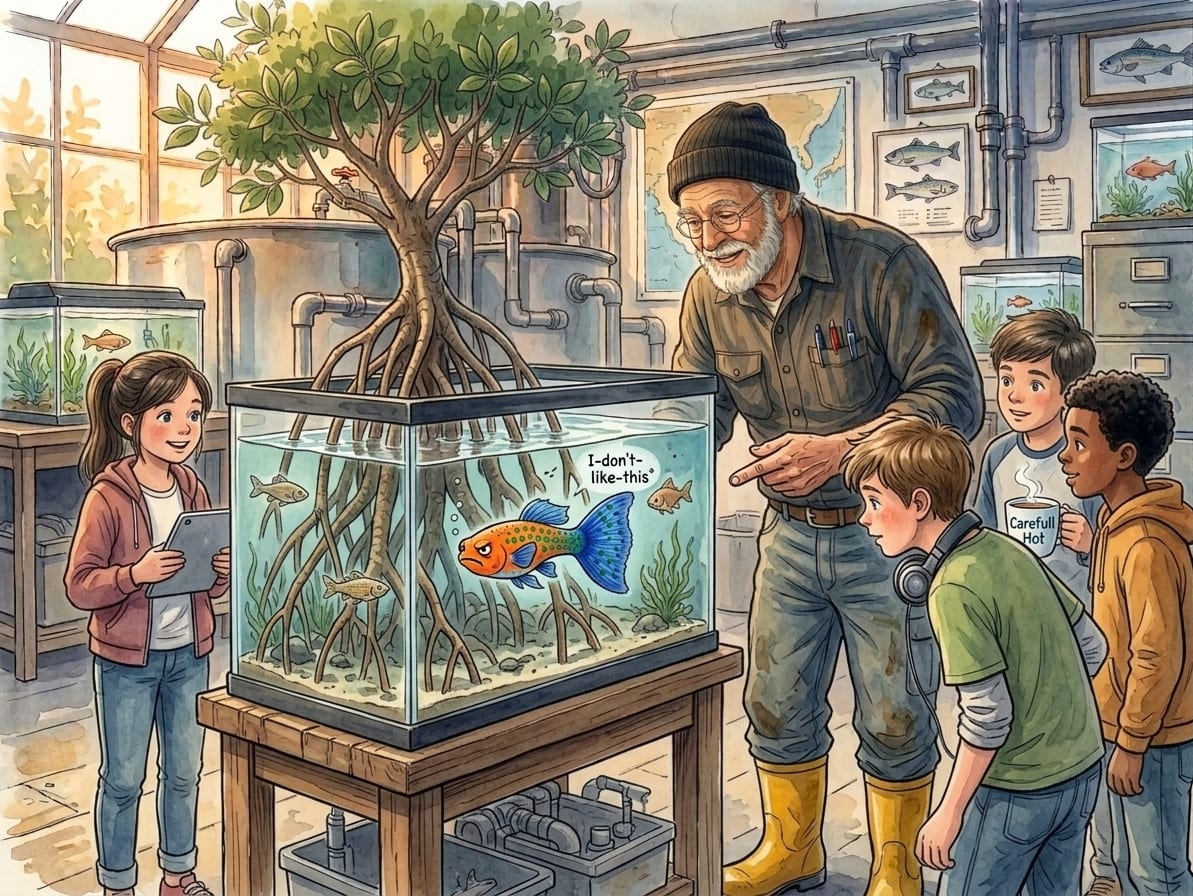
A child who has read Book 1 and understood what happened to George in the brackish tank has learned real biology. The fact that they were laughing while they learned it does not reduce the quality of what they learned.
— Yechiel Kuperman, Marine Biologist
Dispatched from the Fishery Farm by
Yechiel Kuperman
Marine Biologist & Author
Keep reading
More from the Bog
 Fishery Tales
On Luck, Colour, and Breathing First
Madame Molly, a lyretail black molly, offers gentle thoughts on luck, colour, and moving comfortably between fresh, brackish, and salt water.
 Madame Molly5 min
 Fishery Tales
Sir Bubbleton's Journal of Civilised Observations
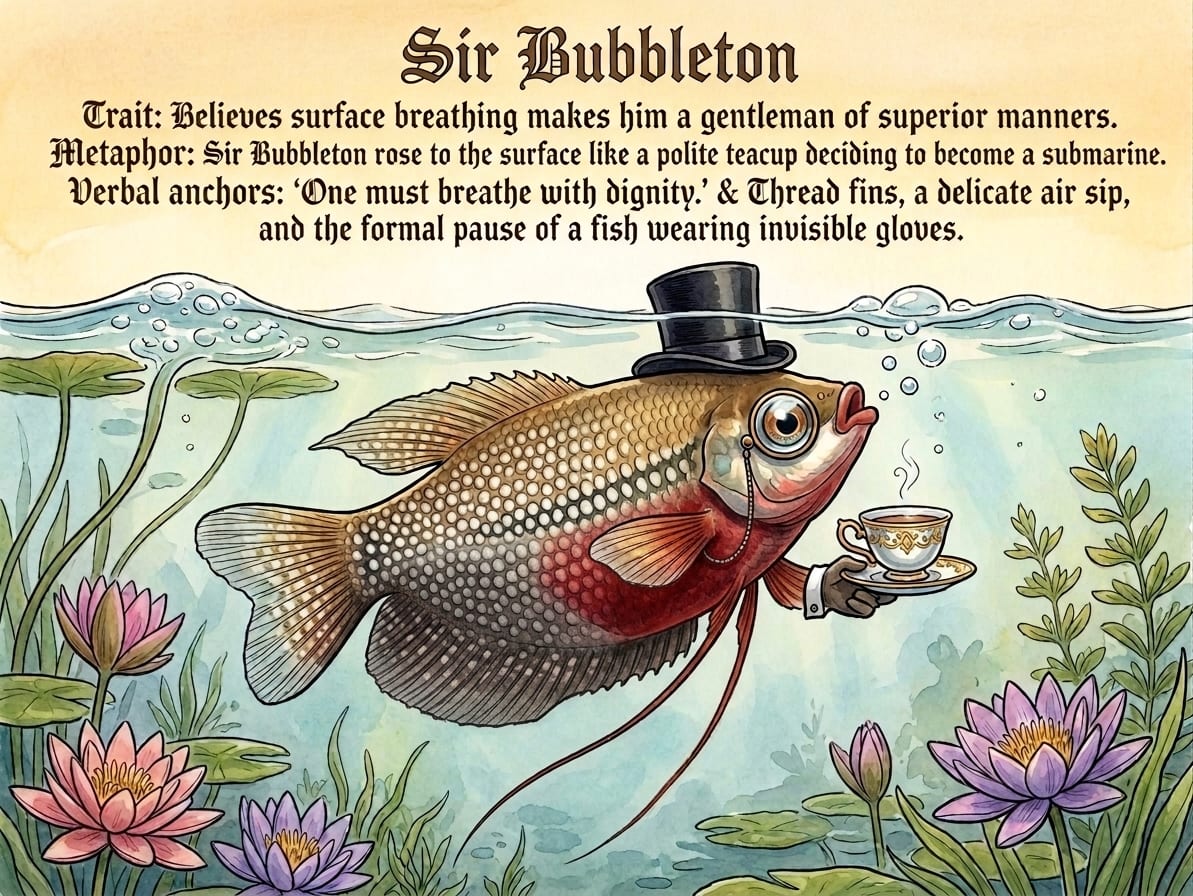
Sir Bubbleton the Gourami explains the labyrinth organ that lets him breathe air at the surface — and why his surface breath is a necessity, not a tea-time choice.
Sir Bubbleton7 min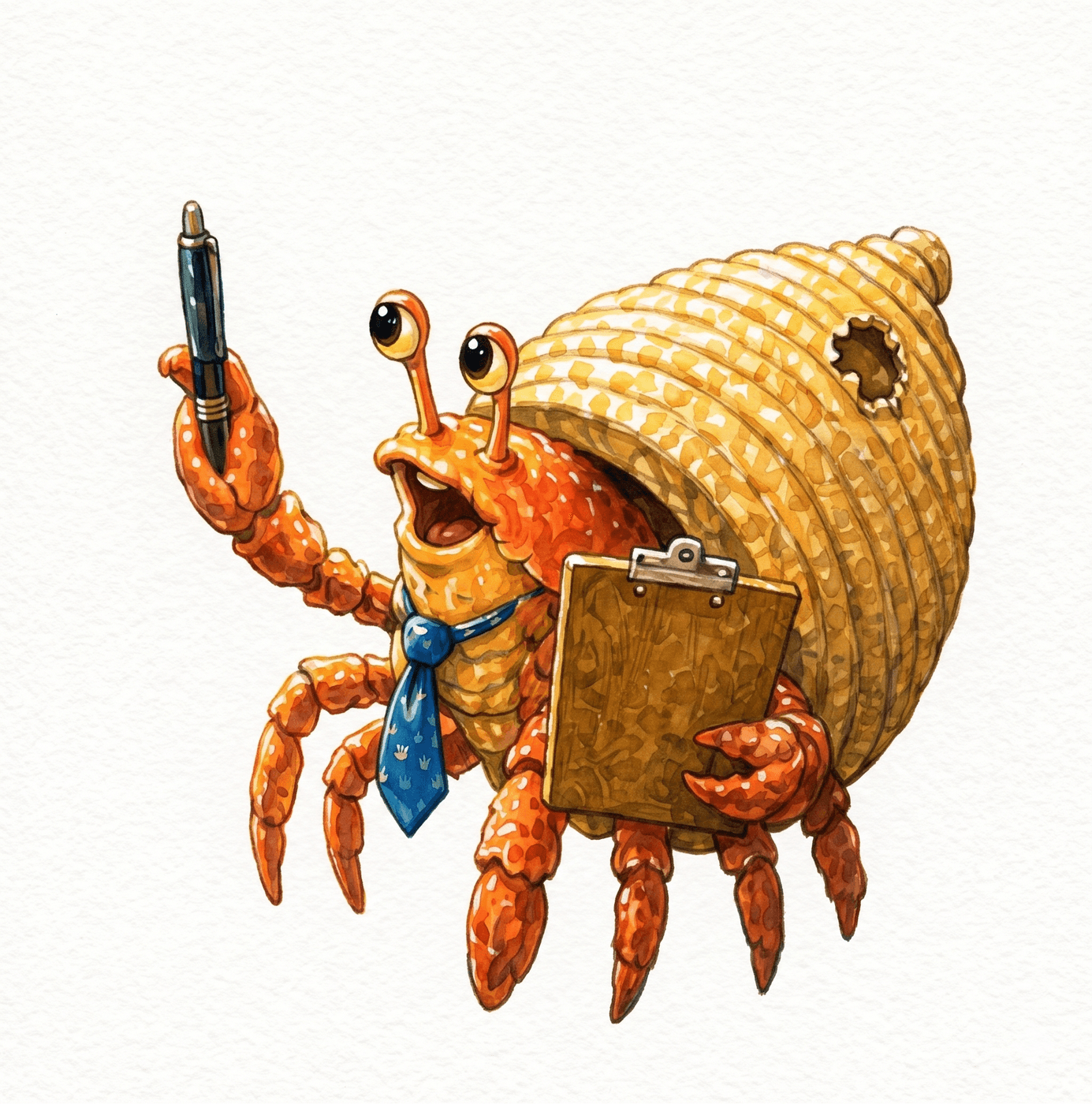 Fishery Tales
I Have Checked For The Net
Pinchy the Hermit Crab hunts the whole tank for the 'inner-net,' never finds it, and decides George would be far less cranky with a good shell instead.
Pinchy the Hermit Crab2 minMeet George in the books.
Funny, dyslexia-friendly marine biology for ages 7–10 — real science, genuinely funny, from a marine biologist.